


Josh Brown
CEO & Founder, Josh Brown Consulting
On-site SEO for law firms involves optimizing website content, structure, and metadata to enhance visibility in search engines. Offsite SEO focuses on external factors like backlinks, legal directory listings, and online mentions to build authority and trust. The primary distinction is control: onsite SEO is managed directly on your website, while offsite SEO depends on external sources.
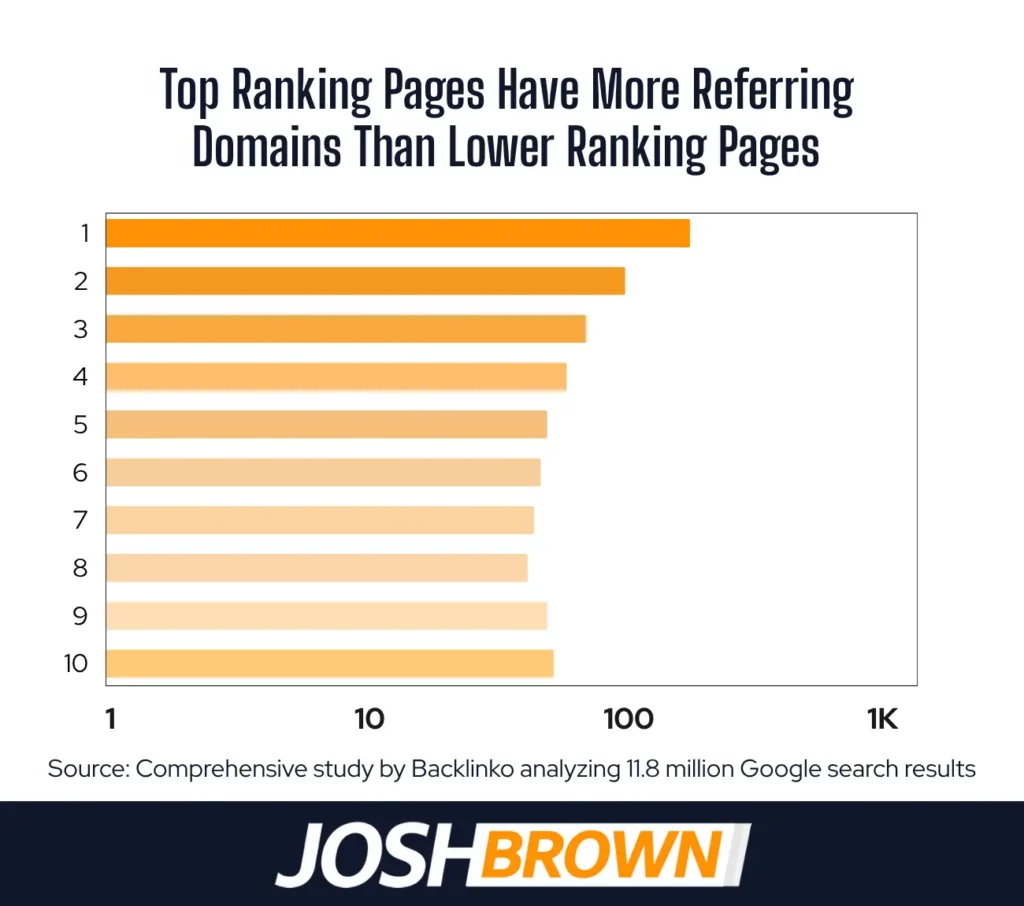
While on-site SEO lays the foundation for search visibility, off-site SEO influences rankings. A comprehensive study by Backlinko analyzing 11.8 million Google search results found that the number of referring domains linking to a page correlates more strongly with higher rankings than the total number of backlinks. This emphasizes the importance of acquiring backlinks from a diverse set of unique domains to enhance search engine rankings.
Effective onsite SEO practices for law firms include incorporating relevant legal keywords, optimizing service pages, implementing structured data (schema), and ensuring a user-friendly experience. Offsite strategies encompass guest blogging on reputable legal websites, earning high-quality backlinks, and managing Google Business Profiles. For firms in competitive markets like Houston or Los Angeles, focusing on geo-targeted keywords and acquiring local backlinks is essential.
As Google’s algorithms evolve, emphasizing semantic relevance and user experience, a balanced approach combining robust onsite optimization with authoritative offsite signals is crucial for sustained search engine success.
What is on-site SEO for law firms?
On-site SEO for law firms refers to the process of optimizing all internal elements of a legal website, such as metadata, on-page content, headings, and URL structures, to improve search engine rankings and visibility. This form of optimization ensures that search engines effectively crawl, index, and understand the website’s relevance to legal search queries.
Key practices include integrating legal keywords into page titles and H1/H2 headings, writing clear and informative service descriptions, using schema markup for legal professionals, and improving page speed and mobile usability. These enhancements help law firms rank higher in Google, attract more qualified clients, and build trust through a professional and user-friendly online presence.
What is off-site SEO, and how does it work for lawyers?
Offsite SEO for lawyers works on building a law firm’s search engine credibility through external signals like backlinks, legal citations, and online mentions. By earning high-quality links from legal directories (e.g., Avvo, Justia), authoritative blogs, news outlets, and relevant legal associations, law firms demonstrate trustworthiness and authority to search engines.
Techniques like guest posting on legal websites, being quoted in legal articles, and maintaining accurate NAP (Name, Address, Phone) data across local listings strengthen off-site SEO. These external references help improve a firm’s domain authority, increase rankings for competitive legal keywords, and drive qualified traffic from high-intent sources, ultimately boosting visibility in both local and organic search results.
What are the differences between onsite and offsite SEO?
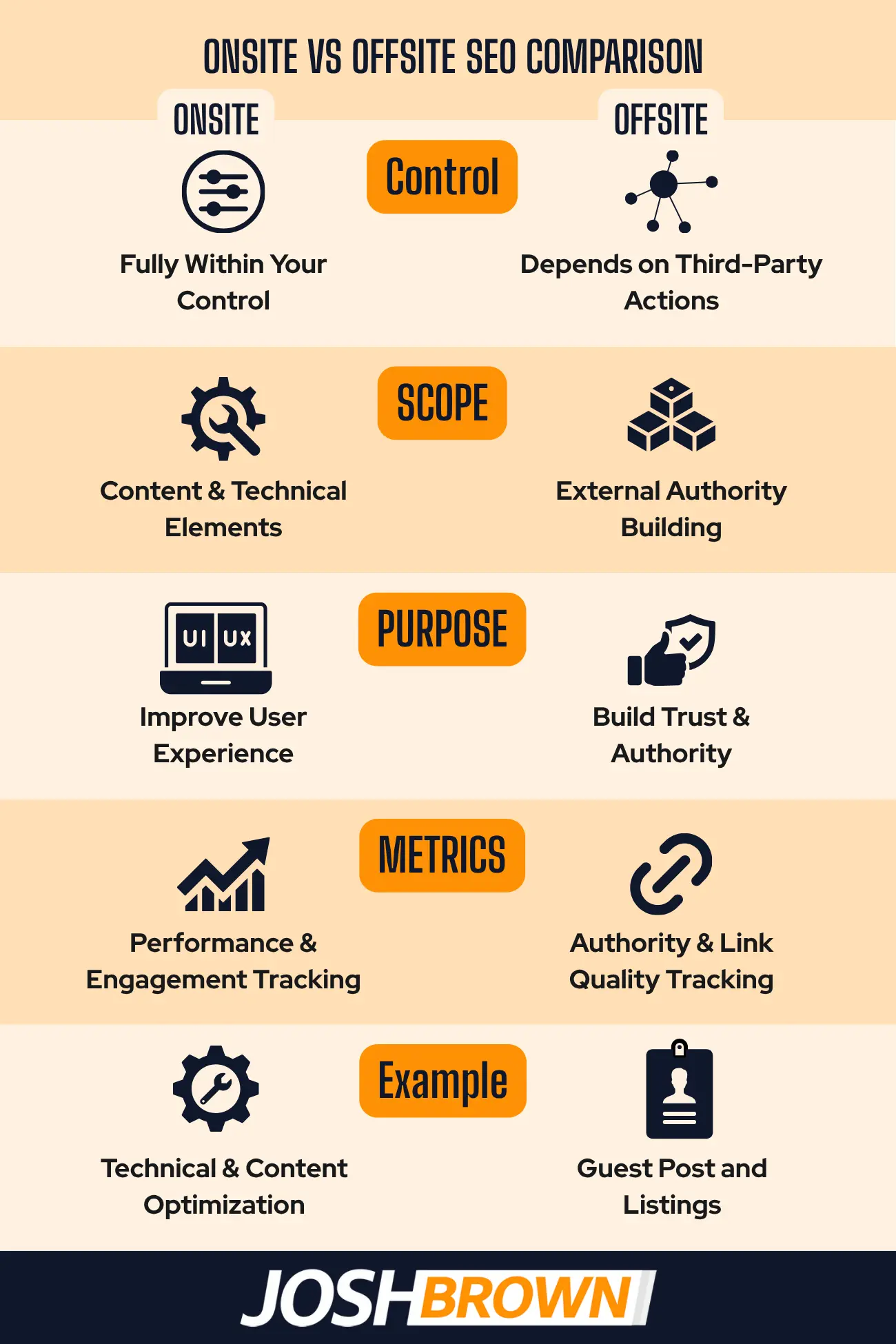
The difference between onsite and offsite SEO serves to distinguish between Control, Scope, and Purpose, as seen on a law firm’s website, which influences search engine rankings. Balancing onsite and offsite SEO empowers law firms to control their website’s content and structure while leveraging external backlinks and citations to boost overall search authority.
Listed below are the differences between onsite and offsite SEO.
- Control: Onsite SEO is fully within the law firm’s control, such as content, headings, while offsite SEO depends on third-party actions such as link mentions.
- Scope: Onsite optimizes content, meta tags, internal links, and technical elements; offsite builds external authority through backlinks, PR, and citations.
- Purpose: Onsite improves crawlability, relevance, and user experience; offsite boosts domain trust, reputation, and authority.
- Metrics: Onsite success is tracked via bounce rates, dwell time, and keyword rankings; offsite is measured through domain rating, backlink profile, and referral traffic.
- Examples: Onsite includes schema markup and page titles; offsite includes guest posts and listings on directories like Avvo and Justia.
Does onsite SEO impact law firm rankings more than offsite SEO?
Yes, onsite SEO impacts law firm rankings early by improving page speed, internal linking, mobile usability, and legal content relevance. It ensures a website is crawlable and indexable by search engines. Offsite SEO, like backlinks and citations, matters more as a firm grows, signaling trust and authority. A 2024 FirstPageSage study found backlinks and brand authority account for over 50% of Google’s ranking factors in legal niches.
How can lawyers balance onsite and offsite SEO efforts?
Lawyers can balance onsite and offsite SEO by acquiring backlinks from legal directories and publications, publishing high-quality legal content regularly simultaneously building external authority and trust signals.
Listed below are ways lawyers can balance onsite and offsite SEO efforts.
- Publish high-quality legal content regularly: Create optimized practice area pages, FAQs, and blog posts to support relevance and search intent.
- Acquire backlinks from legal directories and publications: Build off-site authority through placements on Justia, Avvo, and trusted law blogs.
- Update technical SEO components: Ensure fast page speeds, mobile responsiveness, and structured schema to reinforce onsite performance.
- Optimize Google Business Profile: Strengthen offsite signals by managing reviews, citations, and local profile completeness.
- Cross-promote content: Share onsite blogs via social channels and guest post to gain traffic and backlinks.
- Use tools to monitor performance: Track domain authority, keyword rankings, and backlink health using Ahrefs or SEMrush.
Best Practices for On-Page Optimization for Legal Websites
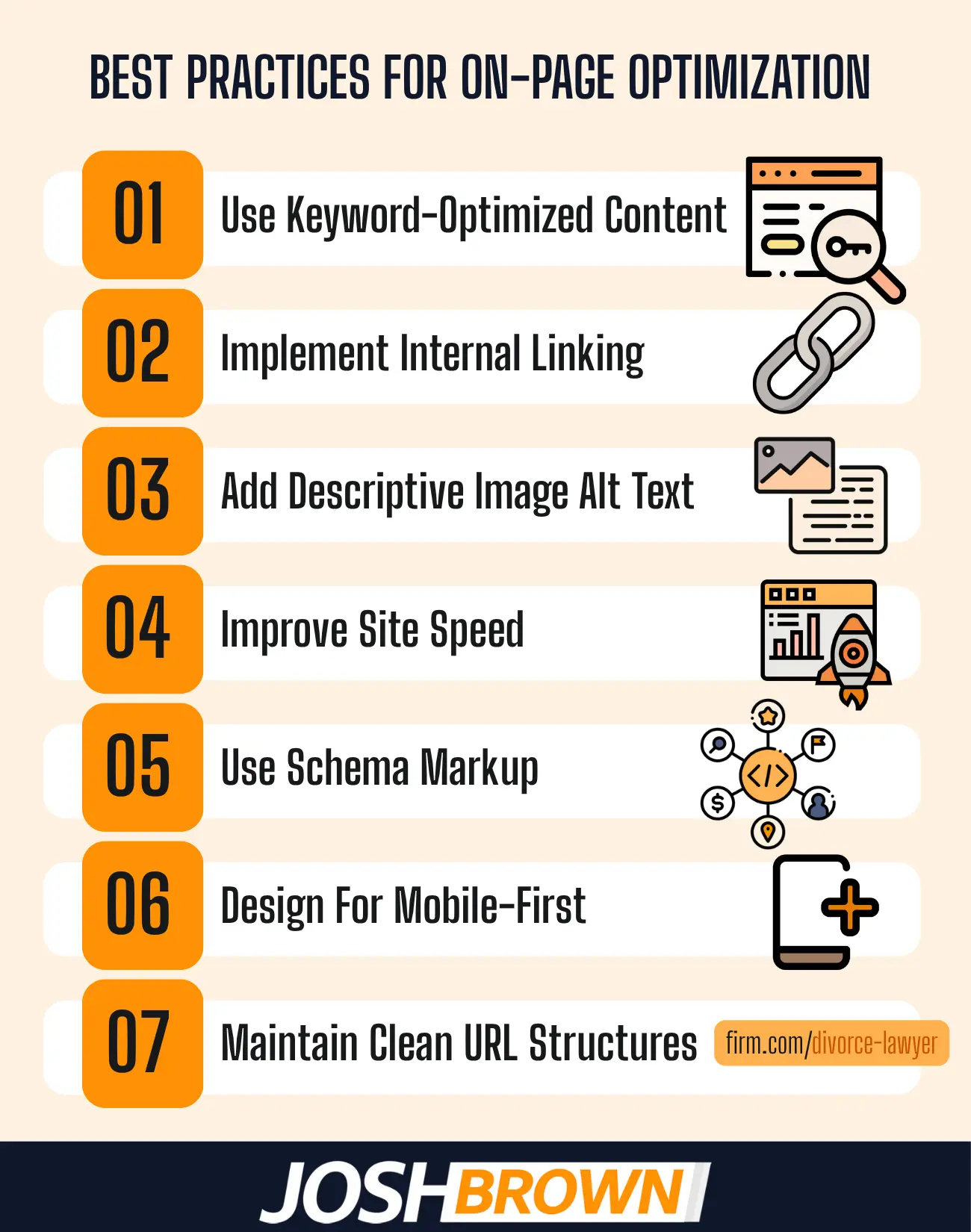
The best practices for on-page optimization for legal websites are to use keyword-optimized content, implement internal linking, and Design for mobile-first. Applying optimization for legal website strategies, such as descriptive alt text, clean URLs, and internal linking, ensures that law firms build a technically sound foundation for higher search visibility and better user engagement.
Listed below are the best practices for On-Page optimization for legal websites.
- Use keyword-optimized content: Integrate legal terms and case-specific keywords into headers, body content, and meta tags.
- Implement internal linking: Connect related pages such as blog posts, practice areas, and FAQs to enhance crawlability and page authority.
- Add descriptive image alt text: Help search engines interpret image content and improve accessibility for all users.
- Improve site speed: Use compression, browser caching, and optimized hosting to reduce load times and boost performance.
- Use schema markup: Apply structured data like LegalService and LocalBusiness to clarify firm details in SERPs.
- Design for mobile-first: Ensure the website is responsive and navigable across all devices.
- Maintain clean URL structures: Use short, readable URLs with keywords to improve indexing and click-through rates.
Best Practices for Off-Page SEO for Attorneys
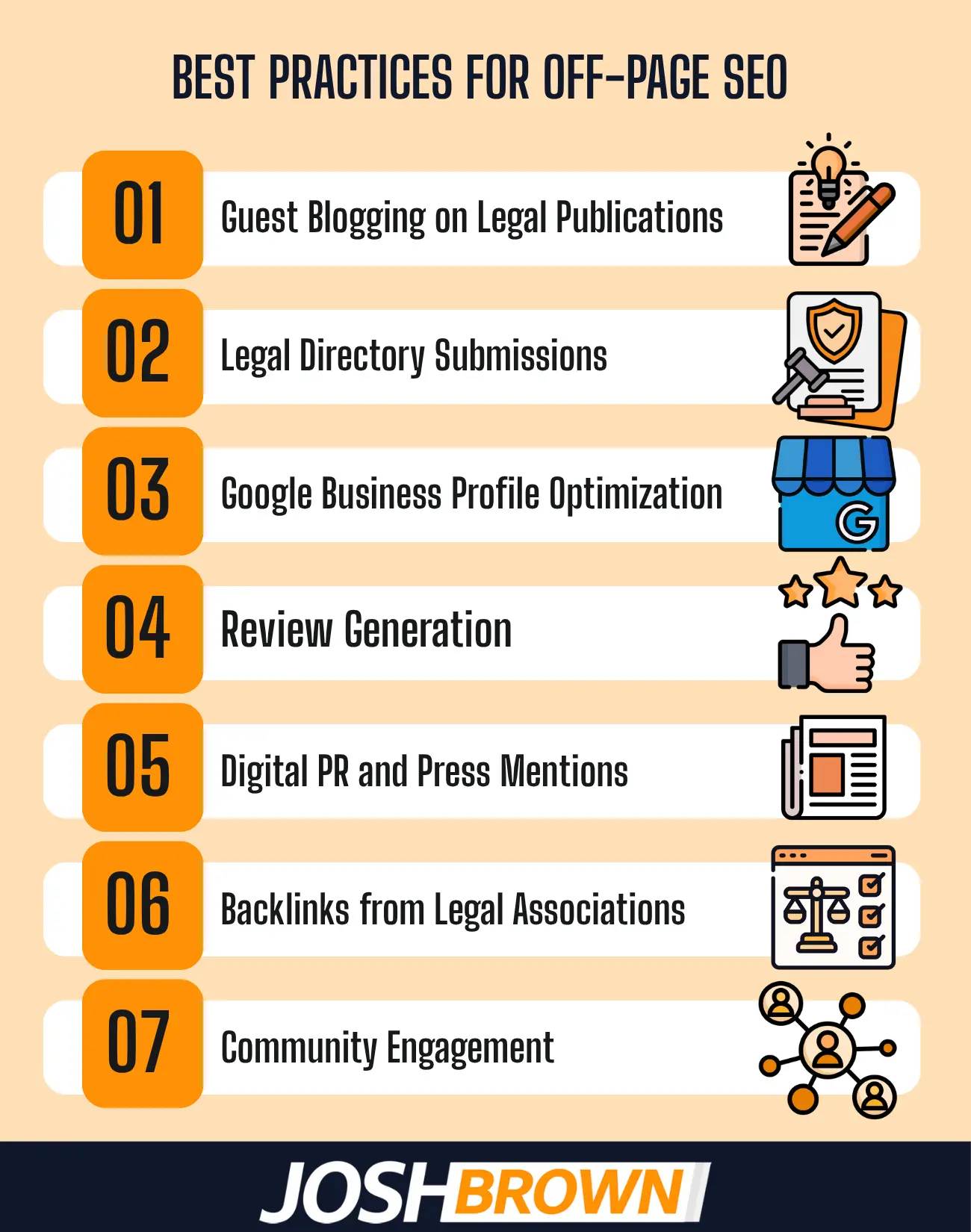
The best practices for off-page SEO for attorneys involve Guest Blogging on Legal Publications and Legal Directory Submissions, external signals that enhance authority and visibility in search rankings.
Listed below are the best practices for Off-Page SEO for attorneys
- Guest Blogging on Legal Publications: Writing for niche legal blogs helps earn authoritative backlinks and positions the attorney as an industry expert.
- Legal Directory Submissions: Submitting to directories like Justia, Avvo, and FindLaw improves link equity and increases local relevance.
- Google Business Profile Optimization: Maintaining an accurate, optimized GBP boosts local visibility in Google Maps and the local pack.
- Review Generation: Encouraging clients to leave reviews on Google and legal platforms enhances trust and influences search ranking.
- Digital PR and Press Mentions: Securing features in news outlets or legal media builds credibility and delivers strong SEO signals.
- Backlinks from Legal Associations: Gaining links from bar associations or law societies reinforces trustworthiness and niche relevance.
- Community Engagement for Natural Links: Hosting events or offering legal education locally earns backlinks from schools, nonprofits, and civic sites.
Are there considerations for onsite and offsite SEO for lawyers in Houston?
Yes, there are specific considerations for onsite and offsite SEO for lawyers in Houston to improve local search visibility and attract regional clients. On-site, law firms include city-specific keywords like “Houston personal injury lawyer” across service pages, meta titles, and headings, and build dedicated location pages that reflect local practice areas.
Offsite, acquiring local backlinks from Houston-based directories, news outlets, and business associations boosts relevance. Both approaches help signal proximity and authority to Google, improving a firm’s presence in local results and the Google Map Pack.
Are there considerations for onsite and offsite SEO for lawyers in Los Angeles?
Yes, there are important onsite and offsite SEO considerations for lawyers in Los Angeles because ranking in such a competitive legal market requires geo-targeted optimization and trusted local signals. On-site strategies include location-specific landing pages using terms like “Los Angeles family law attorney,” while off-site efforts must focus on earning authoritative backlinks, maintaining NAP consistency, and listing in reputable LA-based legal directories to enhance local search visibility.
How might Google’s algorithm shifts affect onsite and offsite SEO for law firms in the future?
Google’s algorithm shifts will impact both onsite and offsite SEO for law firms by prioritizing E-E-A-T (Experience, Expertise, Authoritativeness, Trustworthiness), content freshness, and high-quality backlinks to maintain strong rankings. A 2024 SEMrush study found that 68% of sites losing rank during core updates lacked topical authority or relied on poor external links. Navigating Google’s algorithm for SEO demands that law firms stay agile, update now, reward fresh legal content, authoritative external signals, and structured on-page optimization to sustain rankings in competitive markets.