

Josh Brown
CEO & Founder, Josh Brown Consulting

Google’s 2025 core SEO algorithm updates are reshaping how legal websites are ranked, evaluated, and surfaced across search. These core algorithm updates are broad system-level refinements that affect content visibility based on factors like quality, relevance, and user intent. For law firms operating in YMYL (Your Money Your Life) niches, the impact is especially sharp. Google typically releases 3–5 core updates per year, with the highest ranking volatility seen in legal and healthcare sectors.
The June 2025 Core Update continues Google’s emphasis on content helpfulness, author credibility, and spam reduction. Google now strengthens its evaluation of E‑E‑A‑T signals, experience, expertise, authoritativeness, and trustworthiness, penalizing thin, outdated, or templated legal pages. The latest update also refined how AI‑generated content is assessed, boosted the weight of user signals like dwell time and bounce rate, and tightened link quality scrutiny.
Law firms must monitor these updates to protect both local and organic rankings. Drops often affect shallow content and weak local pages, while deeper, more credible legal content gains visibility. Recovery involves auditing pages, improving topical coverage, enhancing author bios, and removing toxic backlinks. Google Maps rankings and lead generation depend on keeping legal content aligned with evolving quality thresholds and user-first standards.
Listed below are the 10 Google’s 2025 core SEO algorithm updates.
1. Analyze AI Signals
2. Optimize Voice Search
3. Reinforce EEAT credibility
4. Ensure Mobile First Design
5. Focus Local Pack Visibility
6. Monitor Core Updates
7. Improve Page Experience
8. Track Search Console Data
9. Refine Content Quality
10. Enhance Structured Data

1. Analyze AI Signals
AI signals refer to Google’s use of machine learning to interpret search intent, user behavior, and content patterns in ranking decisions. AI systems influence modern SEO by detecting engagement signals like dwell time, bounce rate, and content interaction depth. These systems power features like generative summaries and AI-driven ranking refinements. Google’s algorithms reward pages that align with inferred user needs and penalize low-engagement or misleading content. Law firms must monitor user interaction trends and align page design, intent, and clarity. Best practices include structuring content to answer search intent early, reducing friction, and measuring user flow via behavior analytics.

2. Optimize Voice Search
Voice search optimization prepares content to match natural language queries made via mobile assistants or smart speakers. The shift toward conversational queries affects legal SEO, where clients ask questions like “who is the best injury lawyer near me?” Google surfaces concise, contextually rich answers. Voice-targeted pages need FAQ blocks, conversational headings, and local schema. Optimizing for voice requires clear sentence structure, mobile speed, and long-tail keyword integration. Firms must identify intent-based queries, mark up content with structured data, and compress pages for faster mobile load.
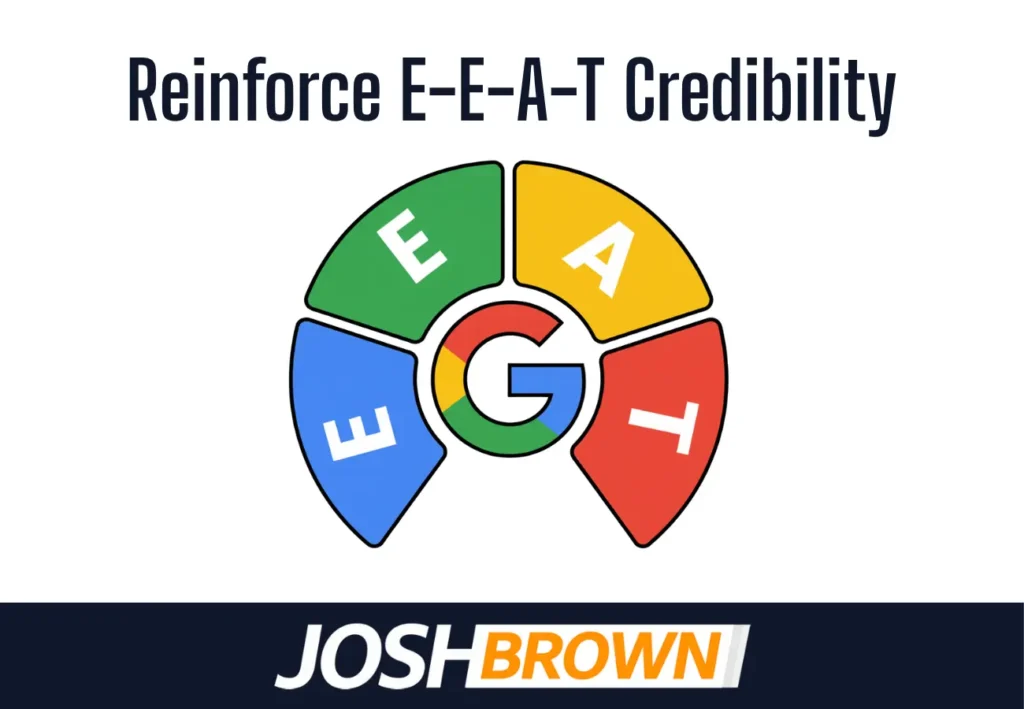
3. Reinforce E-E-A-T Credibility
E-E-A-T (Experience, Expertise, Authoritativeness, Trustworthiness) is a foundational metric in Google Search Optimization that evaluates content credibility. In legal SEO, E-E-A-T directly affects visibility in YMYL categories. Google checks for real authorship, verified credentials, and publication transparency. Weak bios, missing citations, or generic content reduce trust signals. Algorithms now use source reputation and external validation to rank content. Law firms must list attorney qualifications, link to casework or bar listings, and avoid generic AI content. Use named authors, embed trust elements like testimonials, and align layout with credibility-focused design.

4. Ensure Mobile-First Design
Mobile-first design prioritizes performance, usability, and content structure for smartphone screens, which Google uses as the primary basis for indexing. Google’s mobile-first indexing penalizes desktop-heavy pages with poor mobile usability. Core Web Vitals and page load speed impact rankings, particularly for mobile users seeking local legal help. Content hierarchy, tap targets, and responsive elements all affect performance. Law firms must test on mobile-first tools, remove intrusive pop-ups, and shorten load times by compressing images and scripts.

5. Focus Local Pack Visibility
Local Pack visibility refers to inclusion in the 3-pack map results that show for local legal queries. Legal SEO must focus on Local Pack visibility because it drives high-converting traffic from mobile users. Google ranks firms using distance, prominence, and relevance, strengthened by consistent NAP info, reviews, and Google Business Profiles. Algorithmically, local schema, review count, and location-based keywords boost visibility. Firms must maintain citation consistency, earn positive reviews, and update business details across directories.
6. Monitor Core Updates
Core updates are broad Google algorithm changes that redefine how content is ranked and evaluated across search. These updates affect traffic, rankings, and content visibility, especially for YMYL sites like law firms. Updates often recalibrate E-E-A-T weight, content relevance, and spam filtering. Google rarely specifies changes, so law firms must track volatility using SEO tools. Best practices include auditing low-performing pages post-update, improving depth, removing outdated content, and enhancing trust signals.
7. Improve Page Experience
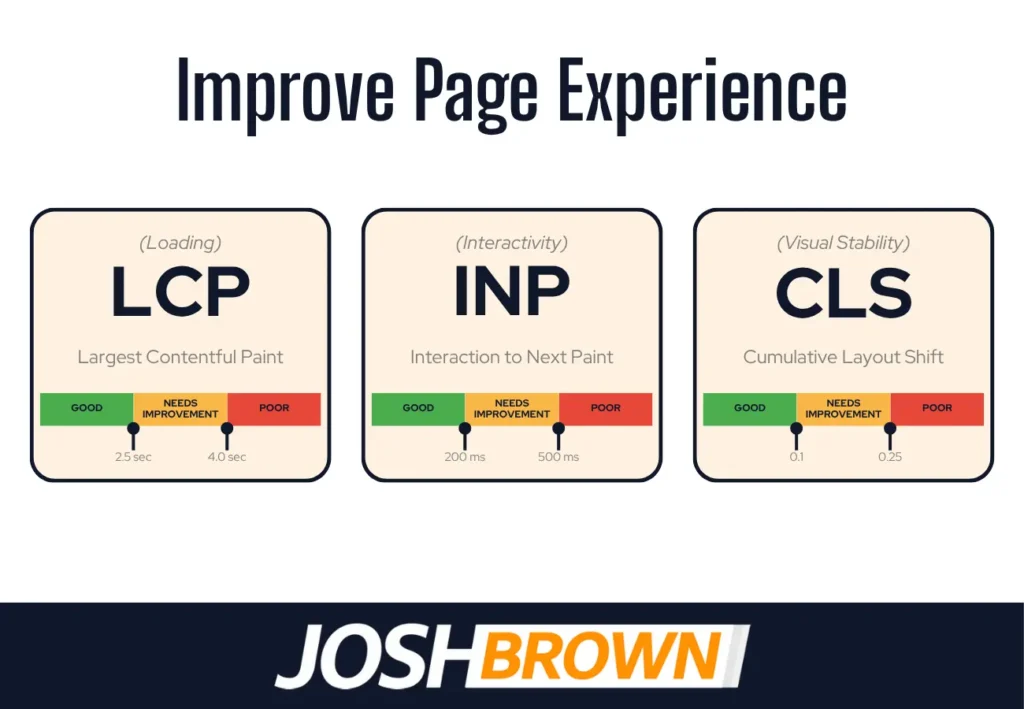
Page experience measures how users perceive site speed, mobile usability, and content stability during interaction. Google incorporates metrics like LCP, FID, and CLS into ranking signals. A poor user experience causes higher bounce rates and lower rankings. Law firms with legal-heavy content must balance depth with speed. Use fast hosting, defer non-critical scripts, and fix layout shifts. Improving the experience retains visitors and satisfies Google’s behavioral expectations.

8. Track Search Console Data
Search Console provides diagnostic data on how a site performs in Google Search, including impressions, clicks, errors, and mobile usability. It’s a core SEO tool to identify ranking drops, indexation issues, and performance trends. Google uses real-time crawl stats and structured data detection from Search Console to shape visibility. Law firms must monitor CTR, fix crawl issues, and validate schema. Schedule monthly audits, filter branded vs. non-branded queries, and export performance reports for decision-making.
9. Refine Content Quality
Content quality refers to the depth, accuracy, clarity, and relevance of legal pages aligned to user intent. Google evaluates legal content on originality, helpfulness, and factual grounding. Thin or recycled content loses visibility post-core updates. Law firms must write for lay readers, include jurisdictional facts, and avoid keyword stuffing. Use internal linking, cite sources, and enrich content with real case references and legal definitions.
10. Enhance Structured Data
Structured data helps Google understand page content by labeling entities, reviews, authors, and locations using schema.org markup. It enables enhanced results like rich snippets, FAQs, and star ratings in search. Google prioritizes clarity in legal topics using structured tags. Law firms must add schema for local business, legal service, and article content. Validate using Rich Results Test, avoid redundant tags, and connect markup to accurate on-page text.
What Are Google Core Algorithm Updates?
Google Core Algorithm Updates are broad, system-wide changes to how Google ranks and evaluates web content across search results. These updates adjust the weight of ranking factors like content quality, relevance, user intent, and trust signals. Core updates impact SEO visibility by reshuffling rankings based on Google’s evolving standards for helpfulness, originality, and authority.
They occur several times per year to improve the search experience and reduce the visibility of low-value or outdated content. Websites in YMYL categories, such as legal and healthcare, often see the most volatility. Understanding these Google algorithm shifts helps law firms and businesses adjust to their SEO ranking changes to stay competitive.
What Should Law Firms Know About Google 2025 SEO Update?
Law firms should know about the Google 2025 SEO update that which reinforces E‑E‑A‑T standards, prioritizes local SEO accuracy, and demands full mobile responsiveness. The update increases scrutiny on author credentials, factual content depth, and user-first design, especially in law firm SEO for YMYL topics.
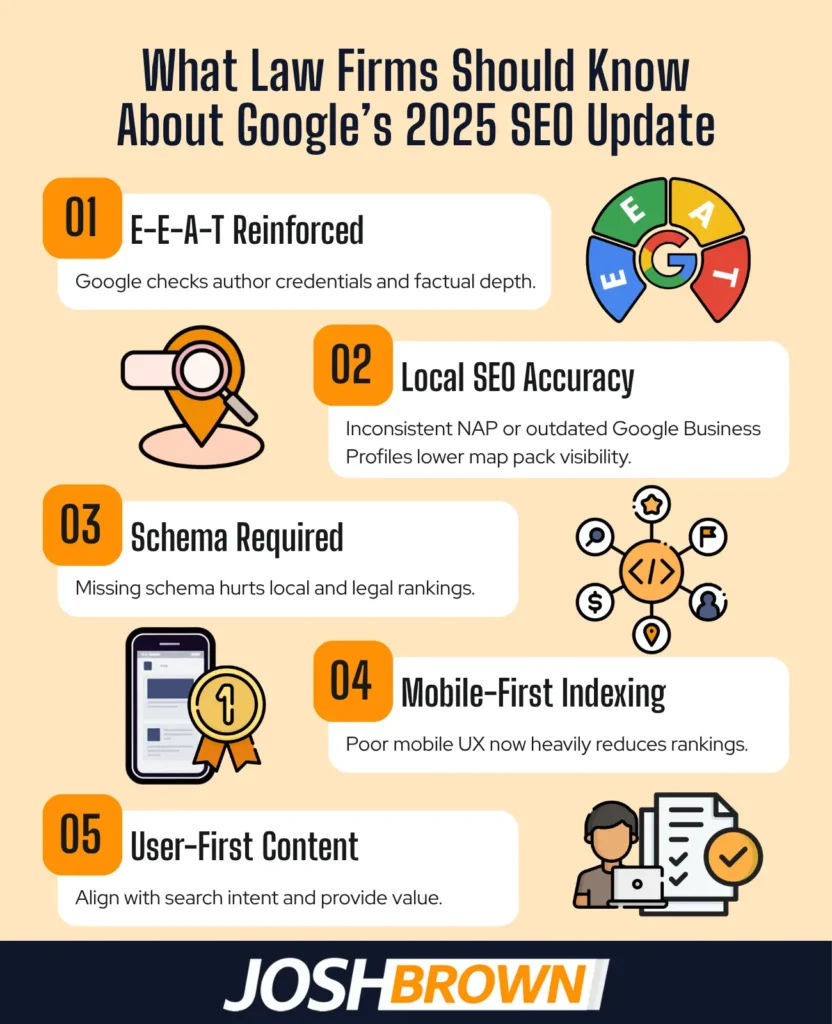
Local map pack rankings are now more sensitive to inconsistent NAP info, outdated Google Business Profiles, and missing schema. Mobile-first indexing remains dominant, and poor mobile UX reduces legal industry ranking even with strong content. Firms must verify author bios, clean up citations, improve mobile performance, and align content with user search intent to stay visible post-Google 2025 update.
What Was the Google June Core Update About?
The June Google Core Update focused on improving content quality signals, reducing low-value pages, and refining ranking for original, trustworthy information. It targeted thin legal blogs, duplicate law firm pages, and templated content lacking E‑E‑A‑T. The update affected YMYL sectors, with high SEO volatility across legal, health, and finance sites. Pages with outdated or generic advice dropped in visibility, while original content with real author bios and helpful details gained. The Google June update reinforced Google’s direction toward surfacing relevant, user-first results across all queries.
Why Should You Care About Google Core Updates?
About Google core updates, you should care because they directly influence search rankings, site authority, and long-term traffic stability. Core updates cause sudden traffic drops, elevate competitors, or penalize low-quality content. These broad changes reshape ranking factors like E‑E‑A‑T, page speed, and relevance. Ignoring them risks visibility loss in critical practice areas.
Adapting SEO strategies, through auditing pages, improving content depth, and strengthening technical performance, helps maintain authority and ranking after every core update, ensuring ongoing SEO awareness and growth.
How Often Does Google Update Its Search Algorithm?
Google often updates its search algorithm several thousand times a year, with a few major core updates that reshape rankings broadly. Minor changes, such as spam filtering, snippet tweaks, and index adjustments, occur almost daily. Broad core updates typically roll out 3–5 times annually, causing noticeable shifts in Google SEO updates and ranking layouts.
A 2023 recap showed Google launched four major core updates (March, August, October, November), double the two core updates in 2022, signaling heightened volatility and greater SEO impact for high-stakes sectors like legal and healthcare. In contrast, daily algorithm changes often slip by unnoticed unless traffic or rankings drop.
What Are the Latest Changes in Google’s SEO Algorithm?
The latest changes in Google’s SEO algorithm are E-E-A-T Evaluation, Page Experience Signals, AI-Content Detection, etc, focused on rewarding helpful, credible content and penalizing technical and quality gaps. Recent updates reflect evolving Google ranking factors that prioritize trust, user behavior, and content clarity.
Listed below are the key Google’s SEO algorithm.
- E-E-A-T Evaluation: Google now weighs experience more heavily alongside expertise, authoritativeness, and trustworthiness, especially for YMYL topics like legal content.
- Page Experience Signals: Metrics like Largest Contentful Paint (LCP), Interaction to Next Paint (INP), and layout stability affect ranking through Core Web Vitals.
- AI-Content Detection: Updates improve Google’s ability to detect low-value or mass-produced AI content lacking originality or helpfulness.
- User Interaction Signals: Increased focus on dwell time, bounce rate, and on-page engagement to gauge content relevance.
- Site Speed & Mobile Responsiveness: Faster load times and mobile-first design remain critical, influencing crawl behavior and visibility.
- Helpful Content System Expansion: Google uses site-wide classifiers to demote unhelpful or templated content, especially across blog networks or legal directories.
What Impact Do Google Core Updates Have on SEO?
Core updates on SEO impact Google through ranking shifts, relevance evaluation, and visibility changes across indexed pages. The impact of core updates on law firm SEO includes traffic drops or gains linked to E‑E‑A‑T, page quality, and content originality.
SEMrush Sensor data shows March 2023’s core update reached a volatility score of 8,74% higher than September 2022, causing 8.7% of top‑10 results to come from URLs outside the top 20 pre‑update. A 2021 report by SISTRIX, titled “Google Core Update Analysis”, found that sites improving author bios and content depth gained up to 93% visibility post-update.
Core updates reward original, high‑trust content and penalize thin, outdated, or duplicated pages. Ranking volatility is highest in legal, health, and finance sectors where trust signals matter most.
How Do You Recover from a Google Core Algorithm Update?
You recover from a Google core algorithm update by auditing weak pages, improving content quality, and reinforcing E‑E‑A‑T signals.
Listed below are the 10 ways to recover from a Google core algorithm update.
- Audit affected pages: Identify ranking losses using Google Search Console and performance reports.
- Evaluate content quality: Remove fluff, update outdated sections, and match content to search intent.
- Improve E-E-A-T: Add author bios, list legal credentials, and display trust indicators like case results or client reviews.
- Remove duplicate or templated pages: Merge near-duplicate URLs and rewrite repetitive legal service pages.
- Fix technical issues: Improve load speed, mobile layout, and structured data accuracy.
- Add useful content: Expand thin pages with FAQs, jurisdiction-specific law, or client scenarios.
- Strengthen internal linking: Connect related pages to improve crawl paths and topical relevance.
- Disavow toxic backlinks: Eliminate spammy links that harm domain trust.
- Monitor metrics: Track performance changes using Search Console and ranking tools.
- Allow time for re-evaluation: Google needs time to reprocess site changes before restoring rankings.
What Were the Key Features of the June Google Core Algorithm Update?
The June Google core algorithm update focused on helpful content, penalized AI-only pages, and reduced the influence of low-quality links.
Listed below are the main changes in the Google June 2025 update.
- Helpful content prioritization: Google boosted rankings for pages offering original, user-focused insights.
- AI-only content devaluation: Pages lacking human expertise, factual depth, or real-world experience lost visibility.
- Author transparency emphasis: Content with visible, credentialed authors and clear bios gained trust signals.
- Link signal refinement: Low-trust, non-contextual backlinks lost value in ranking calculations.
- Spam and duplication filters: Duplicate service pages and mass-produced blogs were suppressed.
- Structured data enforcement: Misused schema markup triggered penalties; validated markup improved indexing.
- Local content accuracy: Jurisdiction-specific legal content ranked higher in local and organic results.