

Josh Brown
CEO & Founder, Josh Brown Consulting
An SEO audit for law firms is a full-site evaluation that identifies SEO issues and opportunities across technical, on-page, and off-site elements to improve Google visibility. Core components include technical SEO (site speed, indexing, mobile-friendliness), on-page SEO (title tags, headings, keyword usage), off-site SEO (backlinks, citations), and content relevance. Technical SEO for law firms focuses on code, speed, crawlability, mobile responsiveness, and HTTPS, all essential for Google ranking and user experience.
On-page checks include legal keyword-optimized title tags, structured H1-H2 headers, keyword placement, internal links, and image alt text. Frequent technical issues on law firm sites include broken links, slow load times, crawl errors, missing sitemaps, duplicate content, and non-responsive design. Off-site SEO involves backlink quality from legal directories, citation consistency, brand mentions, and NAP accuracy across platforms.
Law firm audits differ from general audits due to local SEO needs, practice-area keyword mapping, and YMYL compliance. Tools like SEMrush, Ahrefs, Screaming Frog, Google Search Console, PageSpeed Insights, and BrightLocal help perform these audits. Technical SEO usually takes priority, forming the base for visibility and compliance. Legal-specific structured data, such as LocalBusiness and LegalService, supports rich results and local SEO impact.
What Is an SEO Audit for Law Firms?
An SEO audit for law firms is a structured evaluation of a legal website’s performance in search engines, focused on identifying strengths, weaknesses, and optimization opportunities. This audit analyzes keyword rankings, content alignment with legal services, backlink quality, site structure, and technical performance.
A law firm SEO audit also includes reviewing local visibility factors such as Google Business Profile, NAP consistency, and local legal citations. The goal of a legal website audit is to ensure that the site meets both technical SEO standards and legal industry-specific ranking signals, enabling better positioning for relevant searches and increased visibility for attorney services.
What Are the Core Components of a Law Firm SEO Audit?
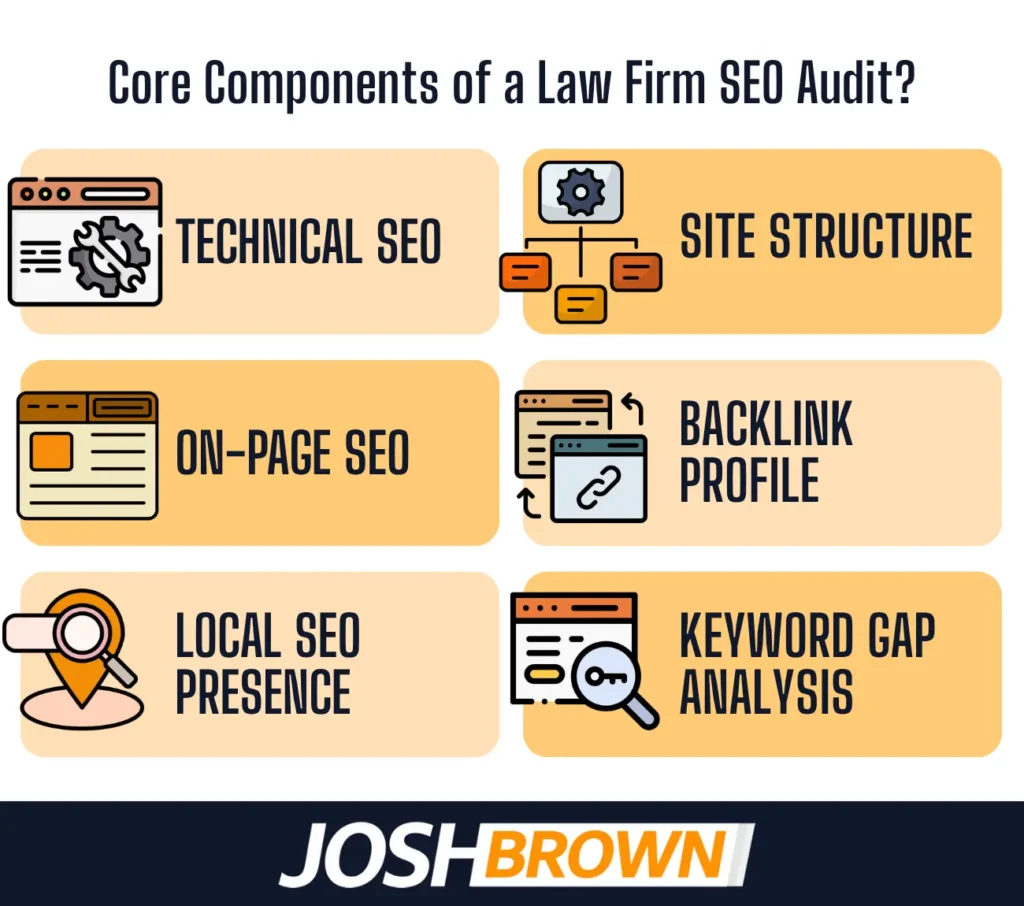
The core components of a law firm SEO audit include technical SEO, site structure, on-page optimization, backlink quality, local SEO presence, and keyword gap analysis. These elements reveal how well a legal website supports visibility, ranking, and compliance with search engine standards.
Listed below are the core components of a law firm SEO audit.
- Technical SEO: Indexing, crawlability, HTTPS, site speed, mobile responsiveness, XML sitemaps
- Site Structure: Internal linking, logical URL hierarchy, and clear navigation paths
- On-Page SEO: Title tags, header tags, keyword targeting, meta descriptions, image alt attributes
- Backlink Profile: Number and authority of inbound links, especially from legal or relevant domains
- Local SEO Presence: NAP accuracy, Google Business Profile setup, legal citations, and local map visibility
- Keyword Gap Analysis: Identification of missing keywords or low-ranking terms compared to competitors
What Does Technical SEO Mean for Law Firms?
Technical SEO for law firms refers to optimizing the website’s backend elements to ensure it is crawlable, indexable, fast, secure, and mobile-responsive. This includes enhancing page speed, implementing HTTPS, fixing broken links, submitting XML sitemaps, and using structured data to help search engines understand legal content.
A properly optimized legal site structure improves user experience, supports higher rankings, and enables rich search results. Most issues addressed in technical SEO for law firm audits involve load time delays, poor mobile layouts, and unindexed pages, all of which limit visibility in competitive local searches.
What On-Page SEO Elements Should Be Checked in a Law Firm SEO Audit?
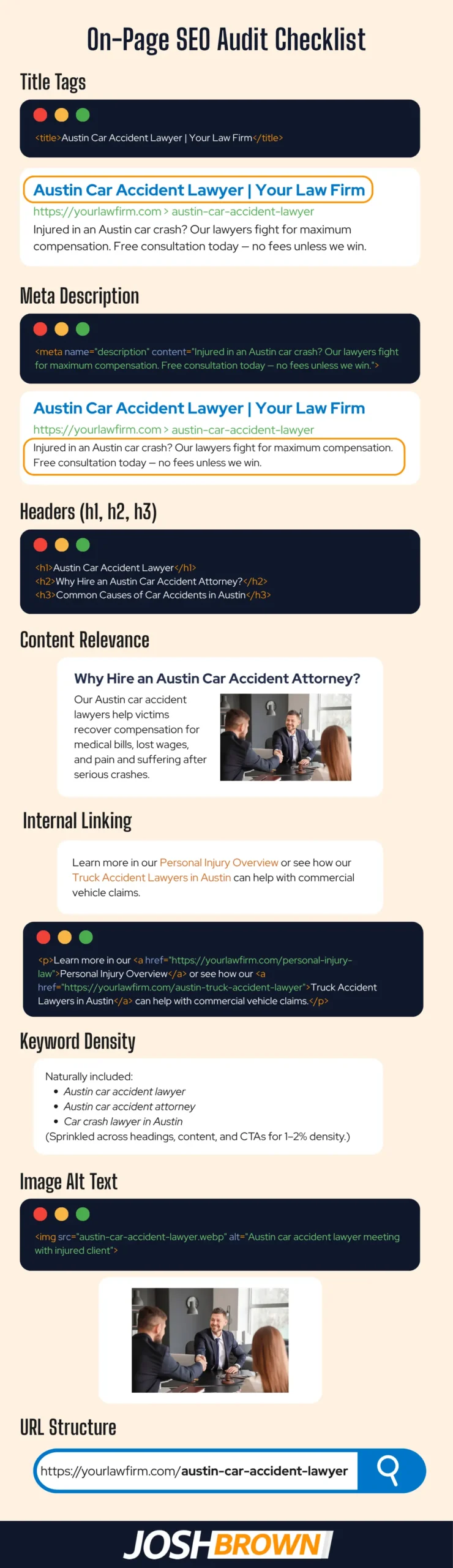
On-page SEO elements should be checked in a law firm SEO audit to ensure title Tags, Meta Descriptions, Header Tags (H1, H2, H3), Content Relevance, etc, each page supports keyword relevance, structured formatting, and search visibility.
Listed below are the key On-page SEO elements.
- Title Tags: Optimized with legal keywords and kept under 60 characters
- Meta Descriptions: Concise summaries with relevant terms and a clear call to action
- Header Tags (H1, H2, H3): Structured to guide content hierarchy and keyword targeting
- Content Relevance: Focused on legal services, jurisdictions, and client intent
- Internal Linking: Strategic links connecting related practice areas and informational pages
- Keyword Density: Balanced keyword usage aligned with search intent without overuse
- Image Alt Text: Descriptive and keyword-supported text for image accessibility and SEO
- URL Structure: Clean, keyword-driven, and semantically aligned with page topics
What Technical SEO Issues Are Commonly Found on Law Firm Websites?
Technical SEO issues that are commonly found on law firm websites are Broken Internal Links, Slow Page Load Speed, Lack of HTTPS, Missing Mobile Responsiveness, performance, and structure problems that reduce crawlability, user experience, and search visibility.
Listed below are Technical SEO issues.
- Broken Internal Links: Lead to 404 errors and disrupt site navigation
- Slow Page Load Speed: Affects bounce rates and mobile usability
- Lack of HTTPS: Reduces trust and security for site visitors
- Missing Mobile Responsiveness: Fails to adapt to mobile screens and triggers ranking penalties
- Poor URL Structure: Includes long, unclear URLs lacking target keywords
- Missing XML Sitemap: Prevents proper indexing of pages by search engines
- Duplicate or Thin Content: Lowers relevance and authority across pages
- Crawl Errors: Block search engines from accessing key site areas

These technical issues on the law firm website for law firm SEO audits must be addressed to improve rankings and deliver a faster, more secure user experience.
What Off-Site SEO Factors Should Law Firms Consider During an Audit?
Off-site SEO factors law firms should consider during an audit include backlinks, legal directory listings, NAP consistency, and client reviews, all of which influence authority and local visibility. High-quality backlinks from legal publications, bar associations, or trusted directories like Avvo and Justia strengthen domain trust.
Accurate name, address, and phone number (NAP) consistency across all listings supports local SEO and Google Business Profile accuracy. Positive client reviews on platforms like Google and Yelp contribute to relevance, trustworthiness, and ranking in local packs. A well-executed off-site SEO law firm strategy builds signals that drive traffic, improve map visibility, and improve online reputation.
How Is a Law Firm SEO Audit Different from a General SEO Audit?
Law firm SEO audits differ from a general SEO audit in their focus on legal trust signals, E-E-A-T standards, and local SEO elements tied to competitive legal markets. Unlike standard audits, legal SEO evaluations prioritize credibility, professional experience, and authority, which are important under Google’s Your Money or Your Life (YMYL) criteria. Law firm audits emphasize local map pack visibility, legal-specific schema such as LegalService, Attorney, LocalBusiness, and review consistency across directories.
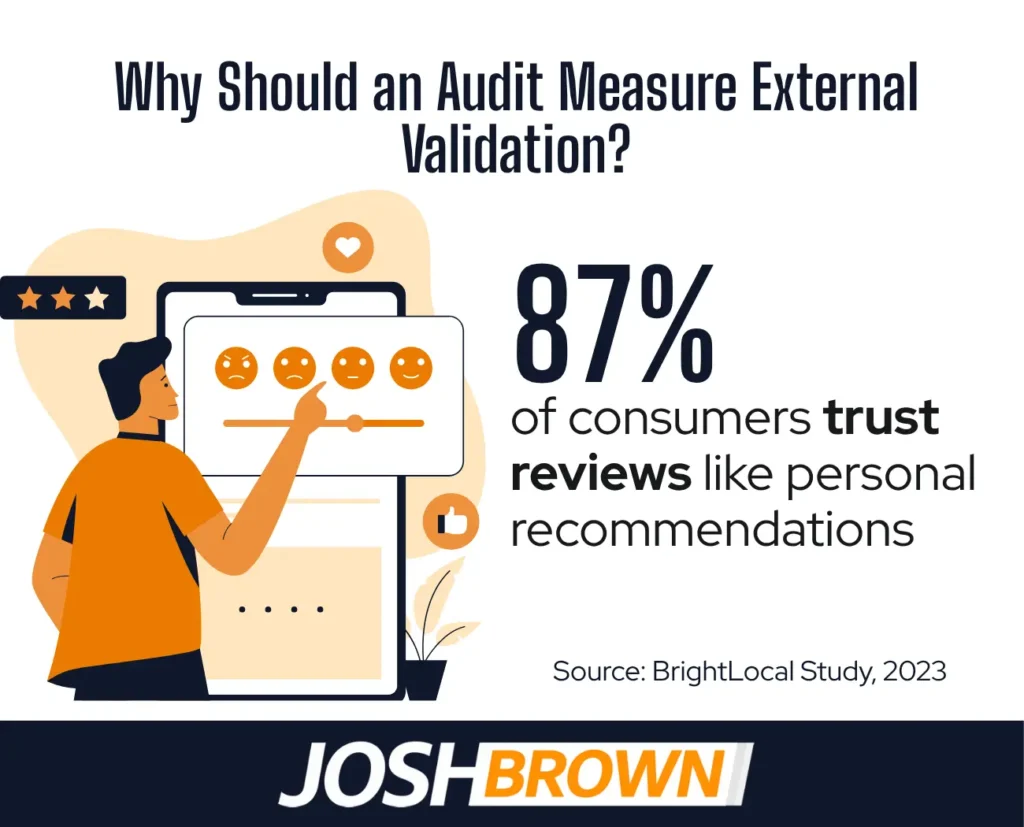
A 2023 study by BrightLocal showed that 87% of legal consumers trust online reviews as much as personal recommendations, reinforcing the audit’s focus on external validation. These factors make law firm SEO audits more compliance-driven and reputation-sensitive than typical audits.
What Tools Are Best for Conducting a Law Firm SEO Audit?
Tools that are best for conducting a law firm SEO audit include Ahrefs, SEMrush, Google Search Console, etc, platforms that assess technical SEO, backlinks, content accuracy, and local search visibility.
Listed below are important law firm SEO tools.
- Ahrefs: Analyzes backlink profiles, competitor domains, and keyword gaps
- SEMrush: Audits on-page SEO, site health, and organic visibility
- Google Search Console: Tracks indexing issues, mobile usability, and search performance
- Screaming Frog: Detects broken links, redirects, missing metadata, and crawl issues
- BrightLocal: Evaluates local citations, NAP consistency, and map pack performance
- Sitebulb: Provides visual audits of technical SEO and site architecture flaws

Can Technical SEO Improve Search Rankings for Law Firms?
Yes, technical SEO can improve search ranking for law firm websites by enhancing crawlability, site speed, and mobile usability, factors directly tied to Google’s algorithm. Optimizing for faster load times reduces bounce rates and improves user experience, while mobile responsiveness ensures accessibility across devices, which is essential in local legal searches.
Implementing structured markup like LegalService and LocalBusiness schema helps search engines interpret content contextually and display rich results. These improvements boost visibility, increase search engine trust, and elevate the site’s position in competitive legal markets.
Is Technical SEO More Important Than On-Page SEO for Law Firms?
Yes, technical SEO is more important than on-page SEO for law firm websites because it ensures the site is crawlable, indexable, and functional, without which on-page elements won’t rank. Technical SEO enables Google to access and evaluate the site through features like clean code, fast load speed, mobile compatibility, and secure HTTPS protocols. On-page SEO enhances keyword targeting, content relevance, and user engagement, but only after technical barriers are removed.
A 2022 study by Backlinko found that pages with faster load speeds were 24% more likely to rank in the top 10 Google results, demonstrating the impact of technical performance on search visibility. Legal site SEO prioritization must begin with technical SEO to unlock full ranking potential.
Why Is Technical SEO Essential for Law Firms’ Online Visibility?
Technical SEO is essential for law firms’ online visibility because it ensures that search engines crawl, index, and rank the site effectively. Elements like XML sitemaps help Google discover all relevant pages, while schema markup, such as LegalService and LocalBusiness, improves search result presentation.
Canonical tags prevent duplicate content issues that dilute ranking signals, and HTTPS secures the site, which is a confirmed ranking factor. Legal website technical optimization creates a stable foundation for visibility in competitive local search results. Without it, even high-quality legal content does not appear in search rankings.
Do Law Firm Websites Use Structured Data Effectively?
No, not all law firm websites use structured data effectively, which limits their potential to appear in rich search results and improve click-through rates. Legal schema markup, such as Attorney, LocalBusiness, LegalService, and Review, helps search engines understand content context and display enhanced listings with ratings, locations, or practice areas.
Structured data improves visibility in local packs, featured snippets, and mobile search. Many sites lack effective data-structured implementation, missing out on opportunities to boost engagement and search performance. Law firms that apply schema correctly gain an edge in SEO enhancement and user trust.