

Josh Brown
CEO & Founder, Josh Brown Consulting

Building citations for law firms means creating consistent mentions of the firm’s Name, Address, and Phone number (NAP) across online directories, legal platforms, and local listings. Citations are important because they strengthen local SEO, improve Google Business Profile trust signals, and ensure clients find accurate contact details. Search engines use citation consistency to verify business legitimacy and location authority, which directly improves local rankings.
Law firms build accurate local citations by claiming listings, auditing duplicates, ensuring NAP consistency, and updating profiles across platforms. The best citation sources include Google Business Profile, Yelp, Avvo, FindLaw, Justia, and chambers of commerce directories. Accurate citations increase search presence, click-through rates, and client trust, while inaccurate citations confuse.
Attorney local citations are legal-specific directories such as Avvo, Lawyers.com, and Martindale-Hubbell, which increase niche authority.
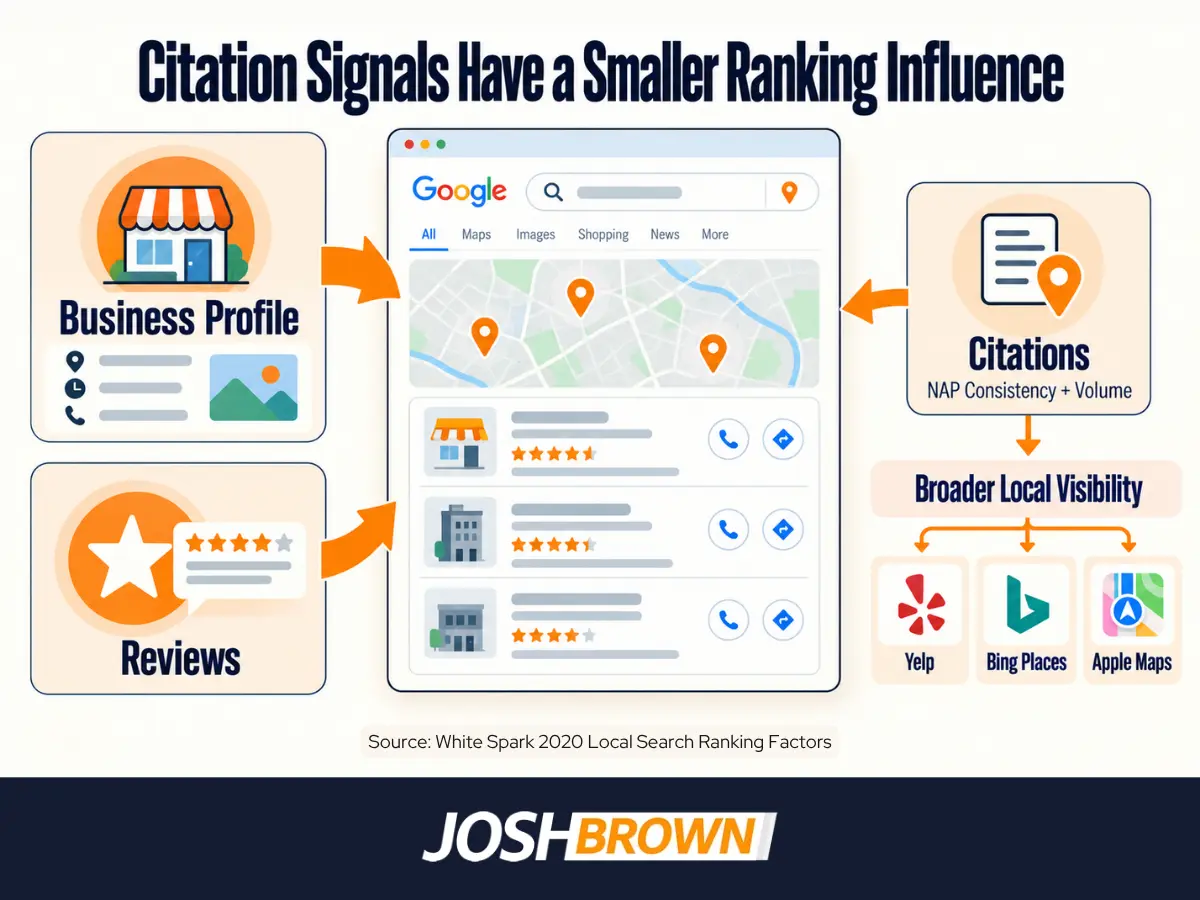
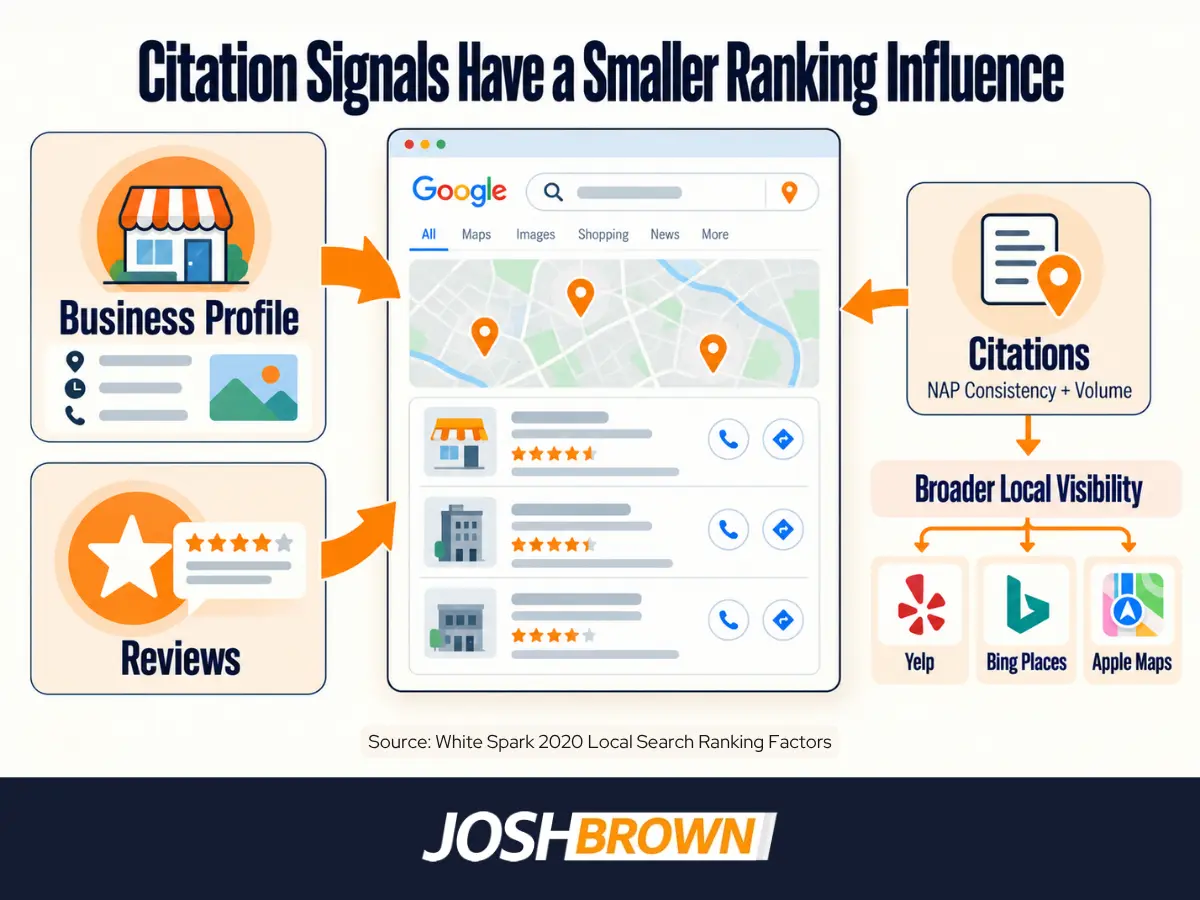
A study by Whitespark titled “2020 Local Search Ranking Factors” in 2020 found that citation signals (like NAP consistency and volume) were considered a minor influence on local pack rankings, with their importance continuing to decline compared to factors like Google Business Profile signals and reviews. Local business citations such as Yelp, Bing Places, and Apple Maps expand visibility beyond legal-specific sites.
Effective citation-building strategies for attorneys include using citation management tools like Moz Local or BrightLocal, leveraging local directories, and monitoring performance. Maintaining accuracy is crucial when offices move, numbers change, or rebranding occurs.
Josh Brown helps law firms build citations through accurate listings on legal directories, local platforms, and map services. Contact Josh Brown for law firm citation building and local SEO support. Josh Brown standardizes business names, addresses, phone numbers, practice areas, and website details to improve local rankings.
Listed below are the 10 steps to build citations for law firms.
1. Claim business listings: Claim business listings across online platforms to verify ownership and control business information. Verified listings help prevent incorrect updates and improve local search accuracy.
2. Ensure NAP consistency: Ensure NAP consistency by maintaining the same business name, address, and phone number across all platforms. Consistent information helps search engines recognize the correct business entity.
3. List in legal directories: List businesses in legal directories to build industry-specific citations and improve online authority. Legal directories provide relevant platforms where clients find accurate law firm information.
4. Include unstructured mentions: Include unstructured mentions in articles, blogs, news sites, and online discussions to increase brand references. These mentions strengthen connections between the business, services, and location.
5. Use citation management tools: Use citation management tools to organize, update, and monitor business listings across multiple platforms. These tools help reduce inconsistencies and simplify citation maintenance.
6. Audit existing citations: Audit existing citations to identify duplicate, outdated, or inaccurate business information. Regular audits help maintain reliable business data across online directories.
7. Optimise Google Business Profile: Optimise Google Business Profile by updating business details, categories, photos, and reviews. A complete profile improves local visibility and customer access to accurate information.
8. Monitor citation performance: Monitor citation performance to evaluate how listings contribute to local visibility and customer actions. Performance tracking helps identify effective citation sources and areas requiring updates.
9. Leverage local directories: Leverage local directories to create location-based business references across relevant platforms. Local directory listings improve geographic relevance and increase discovery opportunities.
10. Maintain citation accuracy: Maintain citation accuracy by regularly reviewing business information across all citation sources. Accurate citations support consistent branding and reduce customer confusion.
1. Claim business listings
Claiming business listings means taking ownership of a law firm’s profiles on platforms such as Google Business Profile, Yelp, and Bing Places. The purpose of claiming listings is to control information accuracy and ensure clients see verified contact details.

In Local SEO, claimed listings improve visibility and credibility because search engines trust verified sources. Reputation management strengthens when the firm responds to reviews and keeps details consistent. Best practice is to claim all relevant listings early, verify them, and regularly review profile data for accuracy.
2. Ensure NAP consistency
Ensuring NAP consistency means aligning a law firm’s Name, Address, and Phone number across every online mention. Law firms strengthen citation trust signals by ensuring citation accuracy through consistent NAP data, which prevents mismatches that reduce Local SEO authority.
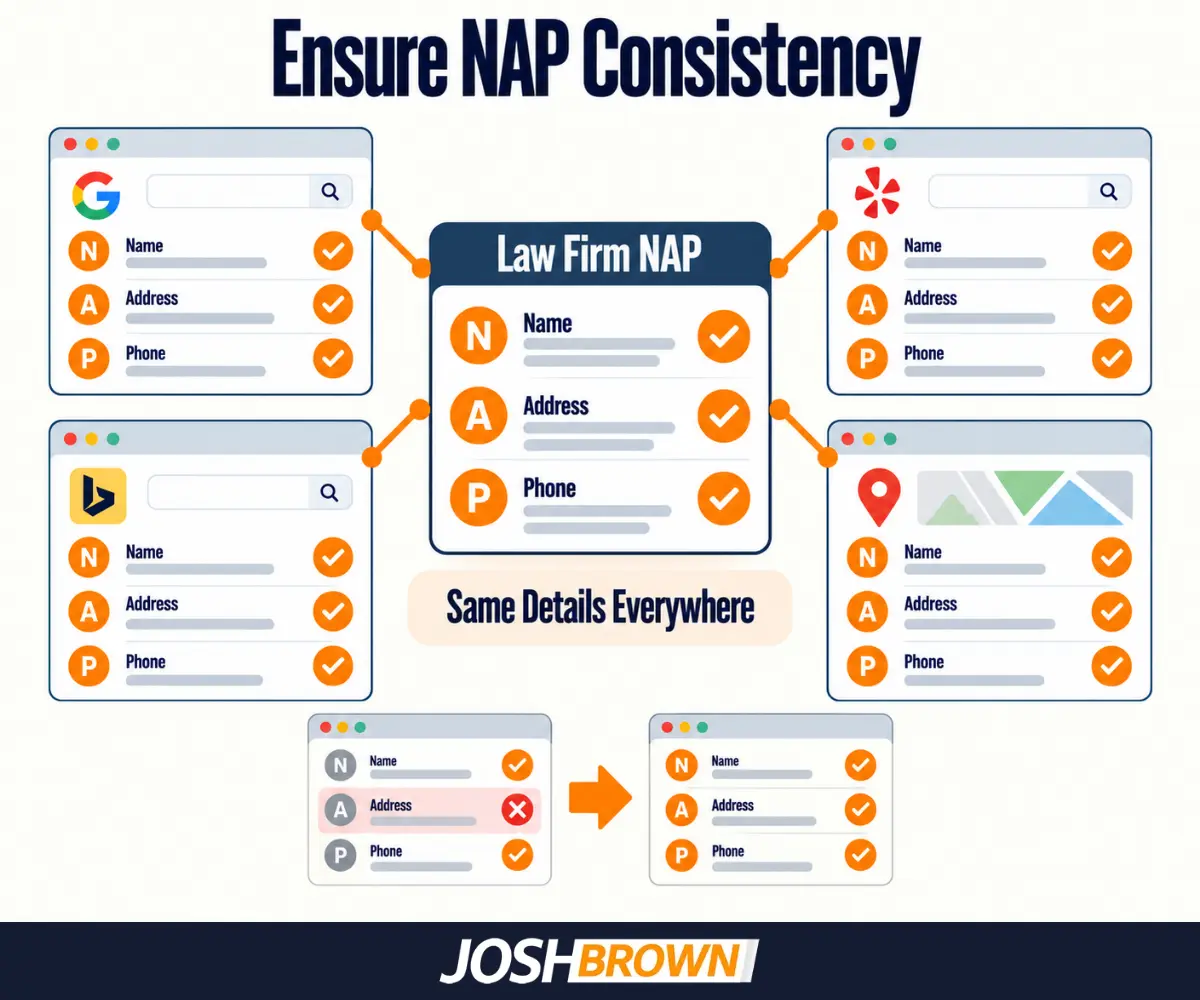
Consistent details help clients find correct information, improve search rankings, and reduce confusion. Best practice is to track all mentions in a central system and update them immediately after any change in firm details.
3. List in legal directories
Listing in legal directories means publishing law firm details on legal-specific platforms like Avvo, FindLaw, Justia, and Martindale-Hubbell. Law firms gain authority by optimizing their legal directory listings, which increases trust in niche markets and improves visibility.
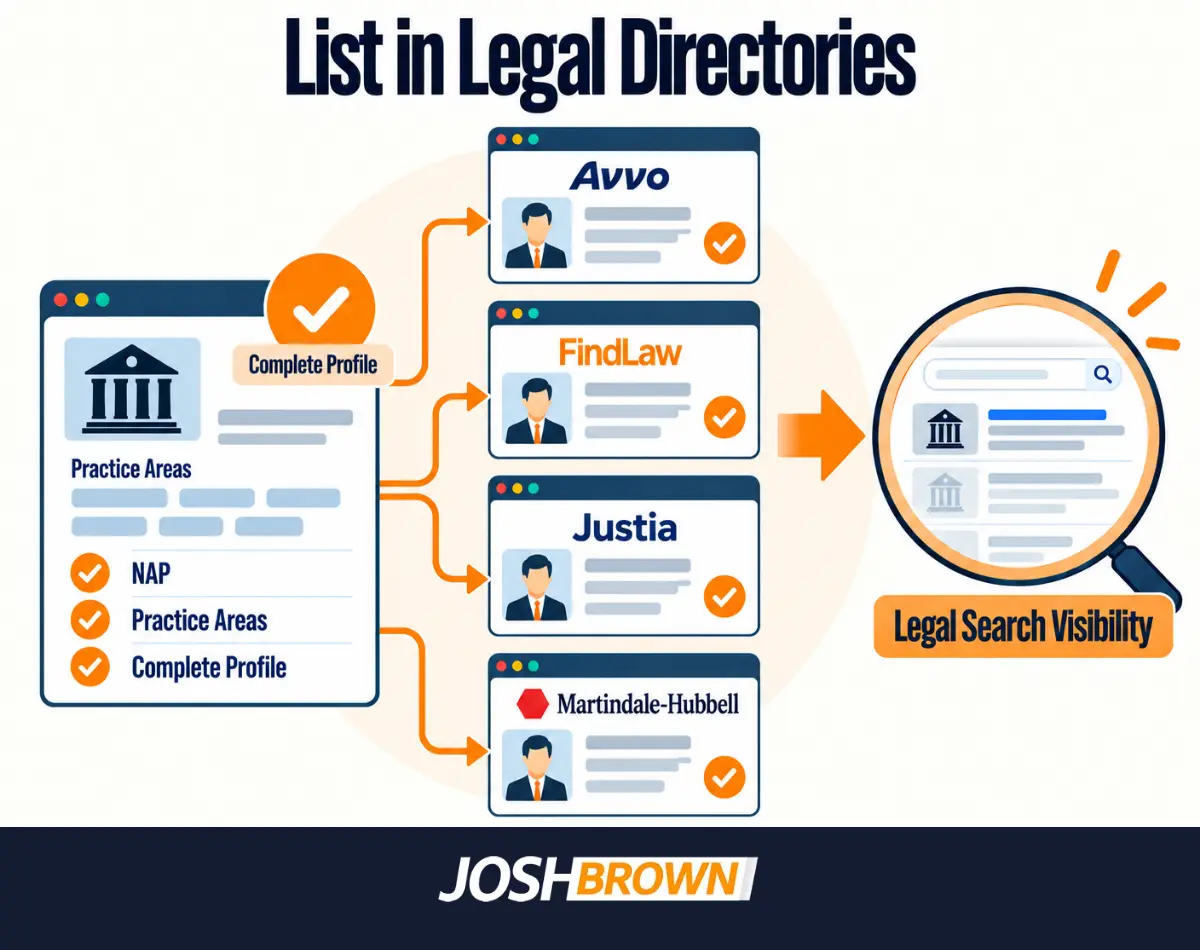
Legal directories also pass strong citation signals to search engines, boosting rankings for law-related queries. Best practice is to fill every field in the directory profile, include practice areas, and keep NAP details accurate.
4. Include unstructured mentions
Including unstructured mentions means gaining references to the law firm’s Name, Address, or Phone number in news articles, blogs, or social media posts. These mentions support Local SEO by signalling relevance and presence even when not formatted as formal citations.

Reputation management benefits because clients view the firm as active and visible across multiple platforms. Best practice is to pursue press releases, sponsor local events, and encourage partners to reference the firm online.
5. Use citation management tools
Using citation management tools means relying on software like Moz Local, BrightLocal, or Yext to manage and distribute business information. These tools streamline law firm marketing by automating updates and monitoring citation accuracy across directories.
Local SEO performance improves because errors and duplicates are quickly identified. Best practice is to choose one reliable tool, integrate it with core business listings, and schedule regular updates.
6. Audit existing citations
Auditing existing citations means reviewing all current listings to identify errors, duplicates, or outdated information. Regular audits protect Local SEO value by ensuring accuracy and preventing dilution of trust signals.
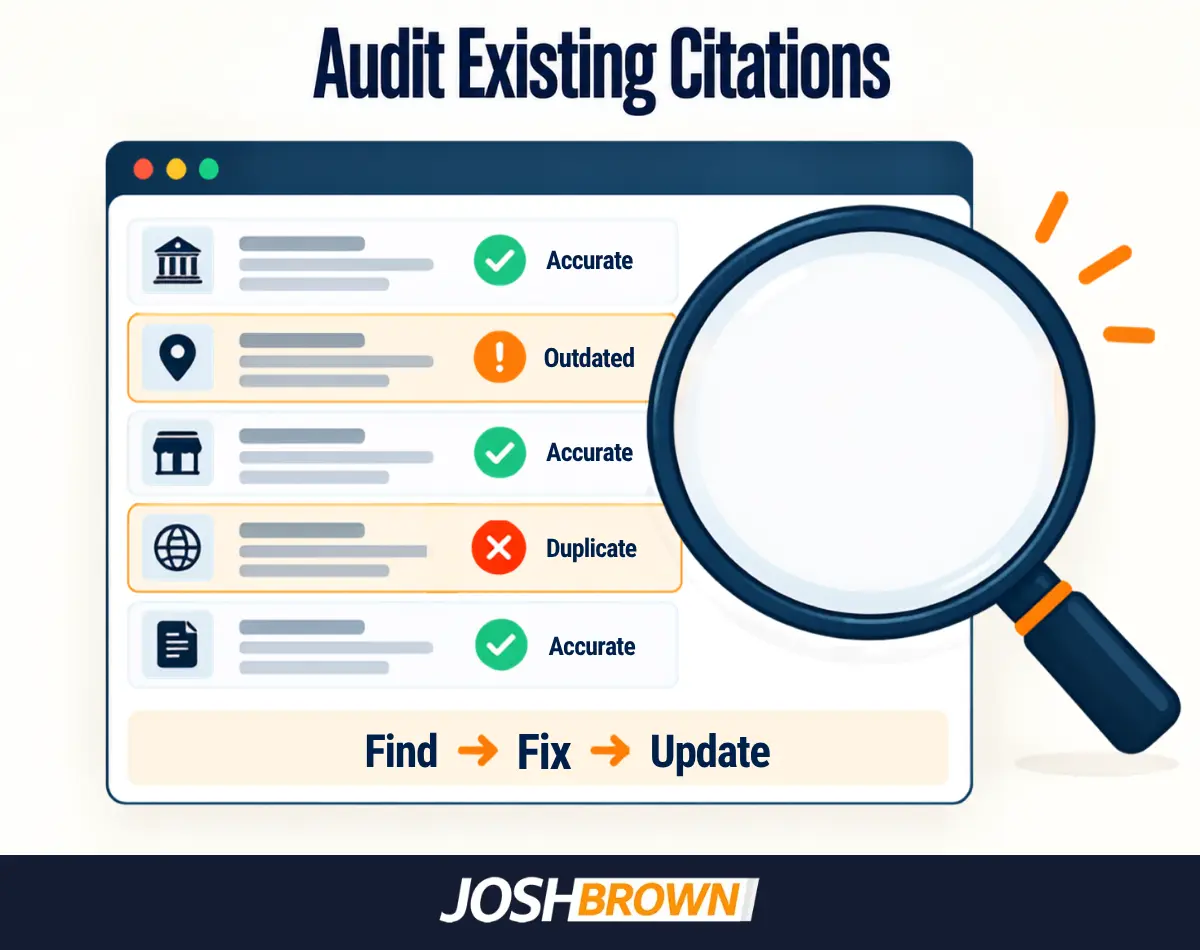
Reputation management improves because clients avoid confusion caused by mismatched details. Best practice is to use audit reports from management tools, correct errors promptly, and document all updates for consistency.
7. Optimise Google Business Profile
Optimising Google Business Profile means improving the firm’s primary listing on Google with complete, accurate, and engaging details. Google uses this listing heavily in Local SEO ranking, making it central for law firm visibility.

Optimised profiles boost client trust and click-through rates by showcasing reviews, photos, and service details. Best practice is to verify the profile, add practice areas, update hours, post regularly, and respond to reviews.
8. Monitor citation performance
Monitoring citation performance means tracking how listings contribute to rankings, visibility, and client inquiries. Performance monitoring helps law firms understand which citations drive traffic and which need improvement.
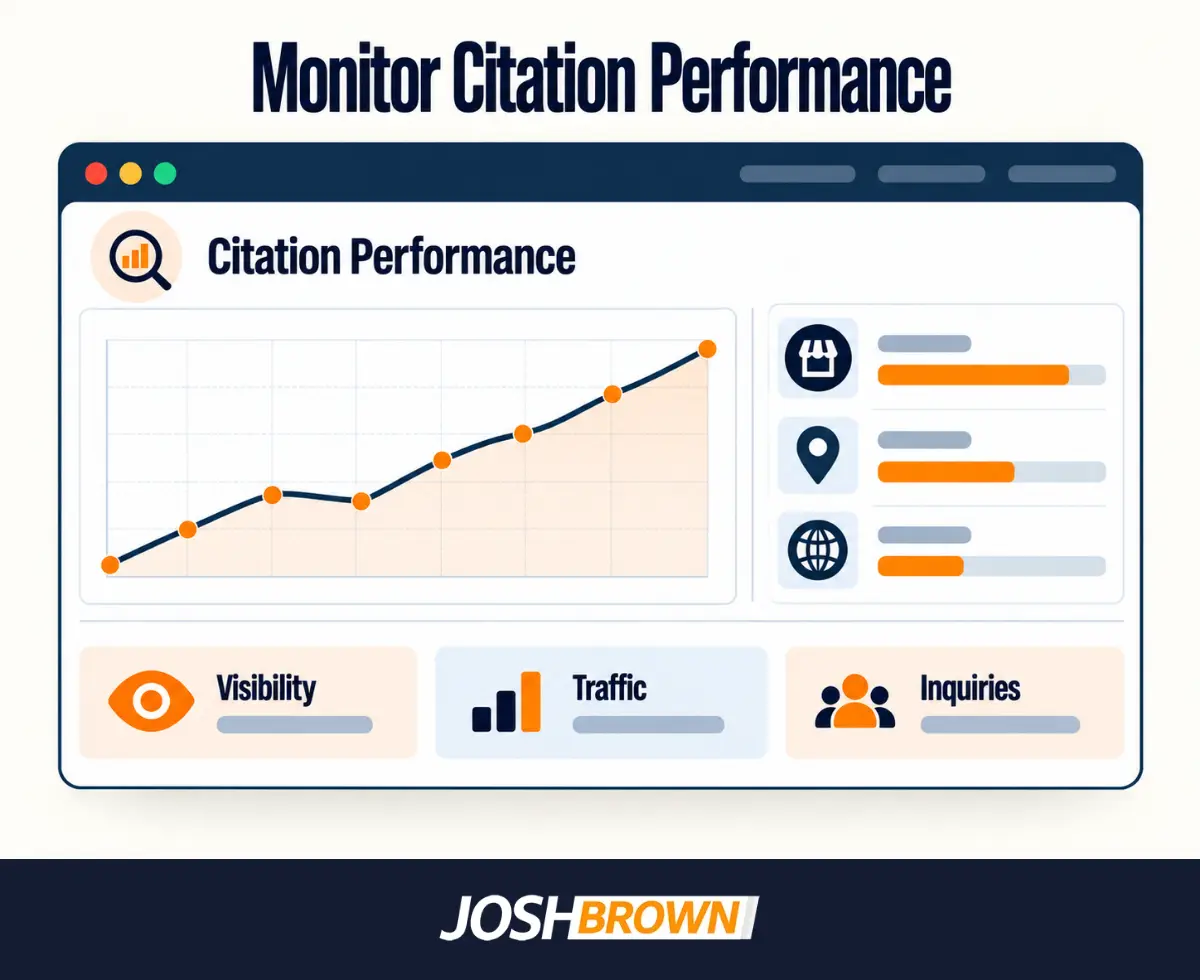
Local SEO benefits from focusing on high-performing platforms, while reputation management improves when reviews are actively managed. Best practice is to use analytics tools, review citation reports monthly, and adjust strategies based on measurable outcomes.
9. Leverage local directories
Leveraging local directories means adding law firm details to regional platforms like chambers of commerce, city business listings, and community boards. Local directories expand visibility beyond legal-specific platforms and strengthen community presence.

Search engines recognise these citations as location signals, which support Local SEO authority. Best practice is to submit consistent NAP data, include a website link, and maintain updated listings in every local directory.
10. Maintain citation accuracy
Maintaining citation accuracy means keeping all law firm listings updated when offices move, phone numbers change, or rebranding occurs. Inconsistent details weaken Local SEO performance and confuse clients.

Accurate citations support trust, credibility, and higher rankings in local searches. Best practice is to schedule quarterly checks, document changes, and immediately update all platforms after any firm detail changes.
What is citation building for law firms?
Building citations for a law firm is the process of creating consistent mentions of the firm’s Name, Address, and Phone number (NAP) across online directories and platforms. Citation building supports Local SEO by signalling business legitimacy and location authority to search engines. Accurate listings on Google Business Profile, Yelp, Avvo, and other directories improve client trust, increase online visibility, and drive more qualified inquiries for legal services.
Why are citations important for law firms?
Citations are important for law firms because they improve local SEO, strengthen authority signals, and build client trust through accurate business information. Consistent listings across directories help search engines verify legitimacy, which increases visibility in local search results and Google Maps.
Accurate citations also shape client perception, as reliable contact details enhance credibility and reduce confusion. A study by Whitespark titled “2020 Local Search Ranking Factors” found that citation signals had become a lower priority in influencing local pack rankings, with far more weight given to Google Business Profile optimisation and reviews.
How do citations improve local rankings for law firms?
Citations improve local rankings for law firms by providing consistent Name, Address, and Phone number (NAP) data that strengthens search engine trust. Local citations are online mentions of a law firm’s NAP across platforms such as Google Business Profile, Yelp, and Avvo.
Structured citations appear in directories with formatted fields, while unstructured citations occur in blogs, news sites, or social media posts. Google’s local algorithm relies on NAP accuracy to confirm business legitimacy and location authority. A strong mix of structured and unstructured citations signals credibility, which helps law firms rank higher in local search results and attract more clients.
How can law firms build accurate local citations?
Law firms can build accurate local citations by auditing current listings, fixing NAP inconsistencies, submitting to directories, and using citation tools.
Listed below are the 5 steps to build accurate local citations.
- Audit existing citations to identify errors, duplicates, and outdated details across directories.
- Correct NAP inconsistencies so the firm’s Name, Address, and Phone number remain uniform everywhere.
- Submit to key directories like Google Business Profile, Yelp, Avvo, FindLaw, and Justia for stronger Local SEO signals.
- Use citation management tools such as Moz Local or BrightLocal to automate updates and prevent errors.
- Monitor regularly by reviewing listings every quarter to maintain accuracy and quickly address changes in firm details.
Which citation sources are best for law firms?
The best citation sources for law firms are Google Business Profile, Bing Places, Yelp, Avvo, FindLaw, and Justia. These platforms strengthen visibility, support Local SEO, and build client trust. Common mistakes in citation building for law firms include inconsistent NAP details, duplicate listings, incomplete profiles, and failing to update information after office changes.
Listed below are the 7 best citation sources for law firms.
- Google Business Profile: primary source for local SEO and map visibility.
- Bing Places: expands reach beyond Google’s ecosystem.
- Yelp: boosts consumer trust and provides strong review signals.
- Avvo: legal-specific directory that increases niche authority.
- FindLaw: authoritative legal platform for practice area listings.
- Justia: trusted resource for law firm profiles and case references.
- Better Business Bureau (BBB): a credibility source valued by both clients and search engines.
Who are the best local citation builders for attorneys?
The best local citation builders for attorneys are professionals like Josh Brown, who provide reliable strategies and positive outcomes for law firm marketing. Law firms benefit from Local citation and seo services that focus on claiming and optimising Google Business Profile, submitting to authoritative legal directories, maintaining NAP consistency, leveraging citation tools, and encouraging client reviews. These strategies improve local rankings, strengthen online authority, and increase client trust through accurate and consistent visibility.
How do citations affect law firm visibility and clients?
Citations affect law firm visibility and clients by improving search rankings, strengthening online presence, and building trust through accurate information. Search engines reward consistent citations with better local visibility, making it easier for clients to find law firm details.
From a client perspective, accurate listings increase confidence in contacting the firm, while inconsistent data causes confusion and reduces trust. Reliable citations support law firm marketing by connecting SEO value with positive user experiences.
What are local business citations for law firms?
Local business citations for law firms are structured mentions of a firm’s Name, Address, and Phone number (NAP) across directories and review platforms. General citations appear on sources like Yelp, BBB, and Bing Places, which build broad visibility.
Legal-specific citations appear on platforms like Avvo and Justia, which strengthen niche authority. Both types of citations work together to validate firm details, support search engine rankings, and improve client trust.