

Josh Brown
CEO & Founder, Josh Brown Consulting

Geo-targeted content for lawyers is content customized to specific cities, regions, or service areas to attract clients searching for legal help locally. Location pages support geo-targeted content for lawyers by featuring attorney profiles, services, firm details, and contact information tied to a city or office. Duplicate content is a risk when firms create multiple location pages, so customized practice details, localized insights, and case examples prevent boilerplate repetition.
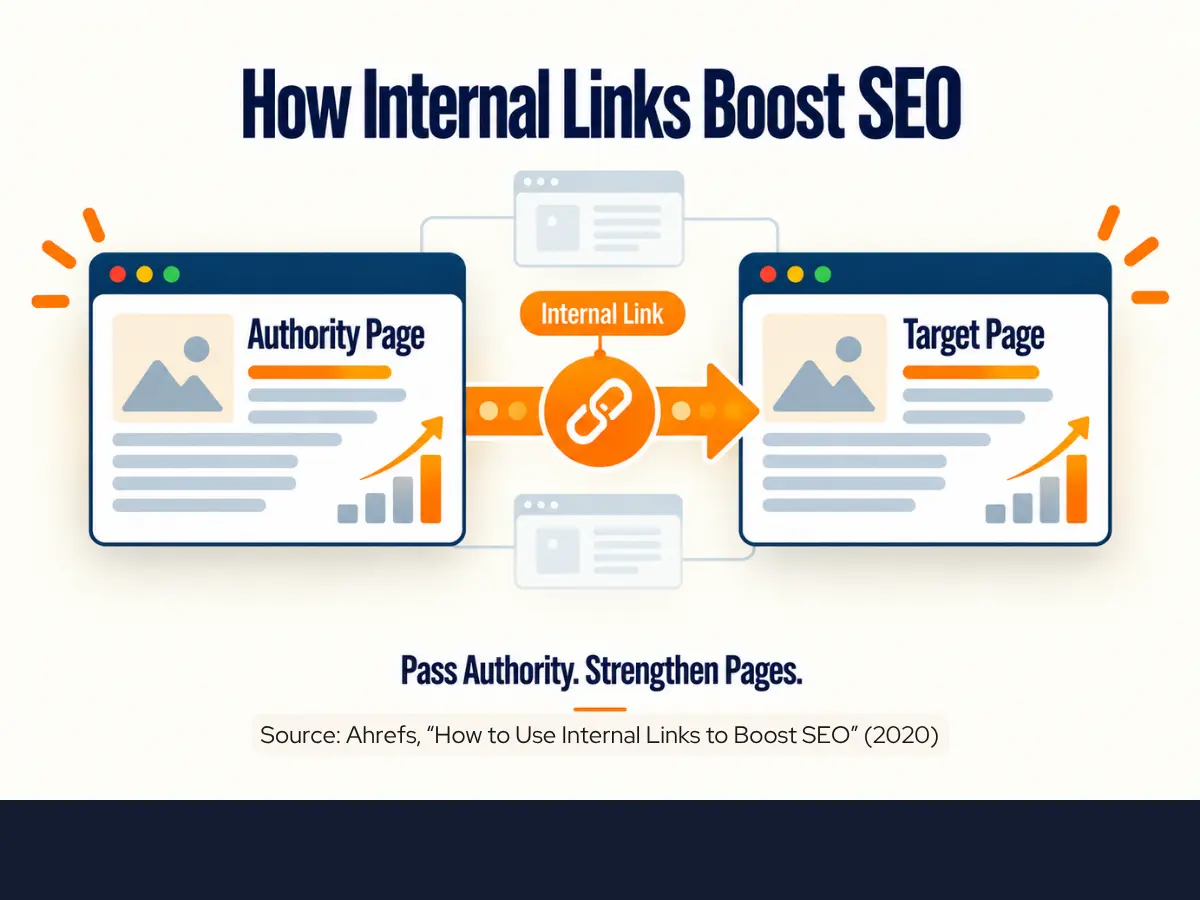
Internal links connect hubs, location pages, and practice areas, forming a structured architecture where hubs link down to cities and location pages link back to relevant services.
A study by Ahrefs titled “How to Use Internal Links to Boost SEO” in 2020 found that adding internal links to underperforming pages led to significant increases in organic traffic, especially when linking from high-authority pages. Internal links improve SEO signals, distribute authority, and guide users effectively.
Geo-targeted content is vital for visibility because clients search “lawyer + city,” and localized content helps firms rank in Google’s local pack. Tools like SEMrush, Ahrefs, BrightLocal, Google Business Profile, and Screaming Frog support audits and strategy. Law firms structure location pages with unique metadata, localized services, testimonials, schema, maps, and CTAs. Local SEO for lawyers uses optimized websites, business citations, and lawyer directories such as FindLaw, Avvo, Justia, Martindale-Hubbell, Super Lawyers, and LegalZoom. Legal content optimization for lawyers aligns text with search intent, while the best SEO for lawyers combines local optimization, geo-targeted landing pages, authoritative backlinks, and positive reviews.
Josh Brown helps law firms build geo-targeted content through location pages, regional hubs, and internal links. Contact Josh Brown for local SEO and location-based content strategy. Josh Brown connects legal services with city-level search intent and local client acquisition.
What is geo-targeted content for lawyers?
Geo-targeted content for lawyers includes city-specific pages and regional targeting strategies that attract local clients searching for legal help. Geo-targeted content strengthens law firm SEO by aligning services with location-based keywords such as “Divorce Lawyer in Miami.” This type of content improves search visibility, connects firms with nearby clients, and ensures relevance in competitive local markets.
Why is geo-targeted content important for lawyers’ visibility?
Geo-targeted content is important for lawyers’ visibility because it improves local ranking in Google’s local pack, map results, and organic searches. Law firm SEO depends on geo-targeted searches like “personal injury lawyer near me,” which drive client acquisition. Local visibility increases when firms publish location-specific content that matches user intent, helping them appear prominently where potential clients are searching.
How do location pages support geo-targeted content for lawyers?
Location pages support geo-targeted content for lawyers by presenting office addresses, attorney profiles, and localized practice descriptions that strengthen city-specific SEO. Law firms improve rankings by using local office pages to support geo SEO, which connect services directly to a region.
Location pages include maps, contact details, and testimonials, giving clients clear information while signaling relevance to search engines. This structure helps law firm websites target local practice areas and improves geo-optimization for competitive markets.
Is duplicate content with multiple location pages risky?
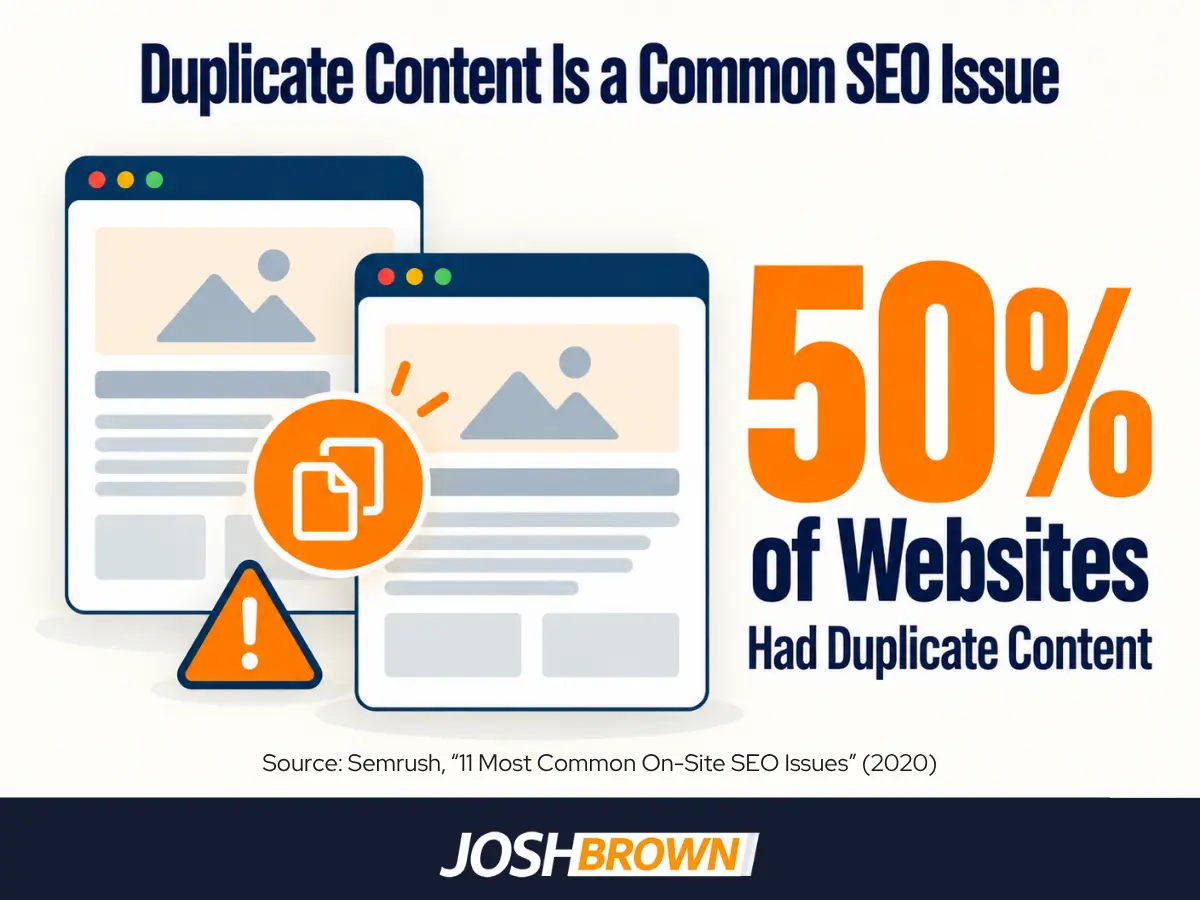
Yes, duplicate content is a risk with multiple location pages if they are not customized with unique details. Law firm websites that reuse boilerplate text across locations face SEO risks, as search engines reduce rankings for pages lacking differentiation. Unique optimization through localized practice descriptions, attorney bios, client reviews, or case studies prevents overlap and strengthens authority.
A study by SEMrush titled “11 Most Common On‑Site SEO Issues” in 2020 found that 50% of the websites analyzed had duplicate content issues, making it one of the most widespread technical SEO problems across the web. Creating distinct content per location ensures stronger performance and avoids penalties.
Can internal links improve geo-targeted content for lawyers?
Yes, internal links can improve geo-targeted content for lawyers by distributing authority, strengthening SEO signals, and guiding users between related pages. Law firms benefit from site structure strategies for location-based content, where hubs connect to location pages, and those pages link back to practice areas. Contextual linking with descriptive anchor text ensures relevance, while a clear hierarchy improves navigation and helps search engines understand page relationships for better geo-targeted SEO.
How do internal links connect hubs, location pages, and practice areas?
Internal links connect hubs, location pages, and practice areas by creating a silo structure that distributes authority and reinforces topical relevance. Hub pages serve as central points linking to multiple location pages, while each location page links back to relevant practice areas. This structure strengthens law firm SEO by clarifying relationships, improving authority distribution, and guiding users to the most relevant services in their region.
What tools can lawyers use to manage geo-targeted content strategy?
Tools lawyers can use to manage geo-targeted content strategy are SEMrush, Ahrefs, Google Search Console, BrightLocal, and Moz Local. These SEO tools help law firms track rankings, analyze competitors, manage citations, optimize local visibility, and improve on-page content for regional targeting.
Listed below are the 6 tools lawyers use to manage geo-targeted content strategy.
- SEMrush: tracks keyword rankings, audits content gaps, and analyzes competitors.
- Ahrefs: identifies backlink opportunities and monitors geo-targeted keyword performance.
- Google Search Console: provides insights on search visibility, crawl errors, and user queries.
- BrightLocal: manages local SEO campaigns, tracks local rankings, and monitors citations.
- Moz Local: distributes consistent NAP data across directories and ensures citation accuracy.
- Surfer SEO: optimizes on-page content with data-driven recommendations for local keyword targeting.
How should law firms structure location pages for SEO?
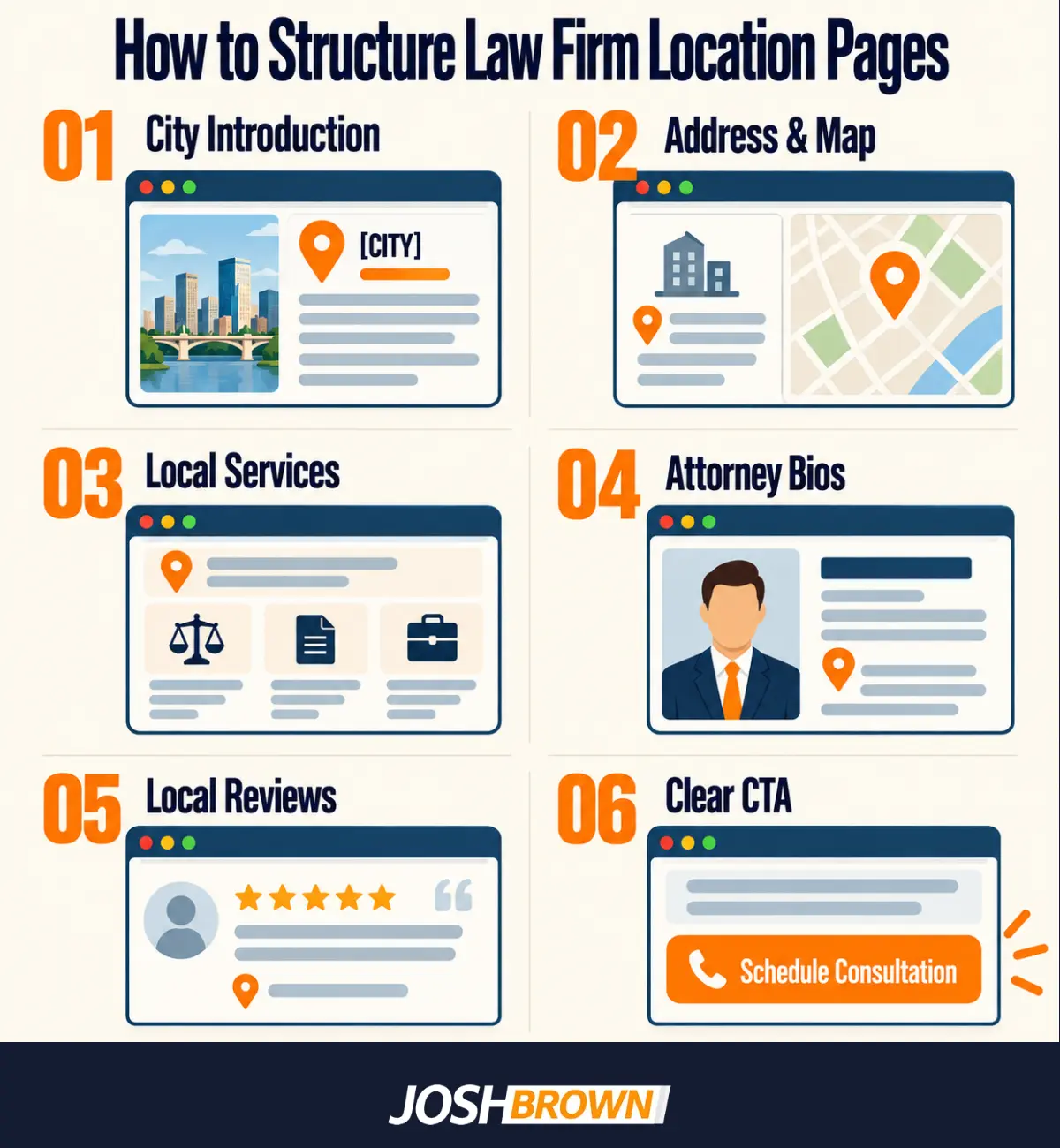
Law firms should structure location pages for SEO by creating unique city intros, adding office addresses with maps, and including localized practice details.
Listed below are 6 steps to optimize effectively.
- Write a unique city introduction that references the location and practice areas.
- Add the office address and map to provide local signals and help clients find the office.
- Include localized practice details that explain services offered in that specific city.
- Feature attorney bios highlighting experience and credentials tied to the local office.
- Showcase client reviews from individuals served in the area to build trust.
- Add clear calls to action (CTAs) that encourage contacting the office or scheduling a consultation.
What is local SEO for lawyers?
Local SEO for lawyers is the optimization of law firm websites and profiles to rank for location-based searches and attract nearby clients through citations, Google Business Profile, Bing Business Profile, reviews, and geo-targeted pages. This strategy strengthens visibility in local search, builds trust with accurate information, and improves client acquisition for law practices.
What are local business citations for law firms?
Local business citations for law firms are online mentions of a firm’s Name, Address, and Phone number (NAP) in directories and platforms that strengthen local SEO authority. Law firms rely on citations supporting geo-targeted SEO by maintaining NAP consistency across both general directories like Yelp and BBB, and legal-specific directories like Avvo and Justia.
A study by Whitespark titled “2020 Local Search Ranking Factors” in 2020 found that citation signals had a reduced influence on local pack rankings, with top-ranking factors being Google Business Profile optimization, reviews, and user behavior.
What are the best lawyer directories?
The best lawyer directories are Avvo, Justia, FindLaw, Martindale-Hubbell, Super Lawyers, and Lawyers.com, which strengthen law firm credibility and SEO visibility.
Listed below are the 6 best lawyer directories.
- Avvo: a trusted directory offering lawyer ratings, profiles, and client reviews.
- Justia: a comprehensive platform providing free profiles and strong SEO visibility.
- FindLaw: an established legal resource that connects clients with attorneys.
- Martindale-Hubbell: respected directory with peer reviews and long-standing authority.
- Super Lawyers: recognition-based directory highlighting top-rated attorneys.
- Lawyers.com: client-focused platform with detailed attorney and firm listings.
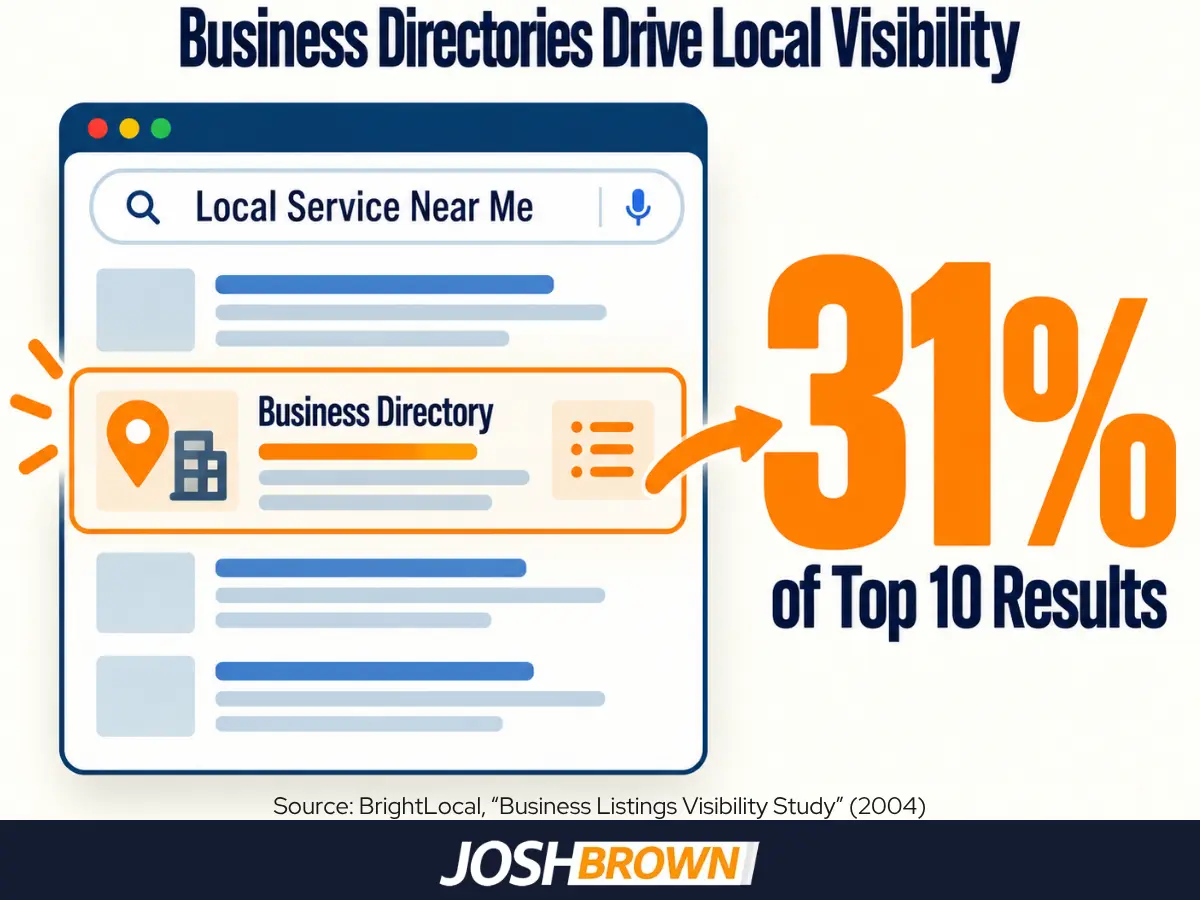
A study by BrightLocal titled “Business Listings Visibility Study” in 2024 found that online business directories appear in 31% of the top 10 organic search results for local-intent keywords, demonstrating their ongoing importance in local SEO visibility.
What is legal content optimization for lawyers?
Legal content optimization for lawyers is the process of improving law firm websites by aligning content with keyword research, semantic SEO, and user intent to attract qualified leads. Optimization includes updating practice area pages, adding contextual internal linking, and refreshing older posts to maintain relevance. These steps strengthen visibility, improve search rankings, and ensure legal content speaks directly to client needs.