


Josh Brown
CEO & Founder, Josh Brown Consulting
Lawyers can avoid SEO scams by rejecting unethical tactics, verifying transparency, and aligning with Google’s Spam Policies. Legal SEO works when grounded in ethical strategy, trust-building, and compliance with Google’s Webmaster Guidelines.
Unethical SEO includes keyword stuffing, cloaking, doorway pages, article spinning, hidden links, and duplicate or scraped content. Tactics like shadow domains, paid link schemes, fake traffic generation, and link farming deceive search engines and damage law firm reputations.
Google’s 2024 Spam Policies penalize such practices through ranking drops, de-indexing, or domain bans, directly threatening firms dependent on credibility and organic visibility. Fake Google partnership claims, surprise redirects, or misleading landing pages further signal SEO fraud.
Red flags from bad SEO providers include #1 ranking guarantees, refusal to explain deliverables, hidden methods, automated backlinks, or sudden traffic spikes. These shortcuts often attract algorithmic penalties and waste firm budgets.
Trustworthy SEO agencies offer full transparency, ethical link-building, clear KPIs, tailored content plans, and regular performance reports. A study by the Project Management Institute, titled “Building Trust in Digital Project Delivery,” in 2024 found that transparency and defined metrics reduce failure rates in outsourced digital projects by over 43%.
Lawyers protect their practice by verifying portfolios, reviewing references, checking contracts, and rejecting vague, automated, or deceptive SEO strategies.
Listed below are 15 ways lawyers avoid SEO scams.
- 1. Keyword stuffing
- 2. Hidden text and links
- 3. Cloaking doorway pages
- 4. Shadow domains
- 5. Link farming
- 6. Paid link schemes
- 7. Surprise redirects
- 8. Duplicated content
- 9. Scraper content
- 10. Article spinning
- 11. Mislead redirects
- 12. Instant link building
- 13. Unverified traffic
- 14. Fake Google claims
- 15. Non-transparent methods

1. Keyword Stuffing
Keyword stuffing is the excessive repetition of terms in website content to manipulate search rankings. This tactic breaks Google Guidelines and triggers Search Engine Penalties.
Keyword stuffing damages SEO performance by lowering content readability, inflating term frequency, and signaling manipulation. Search engines detect unnatural density in headings, metadata, alt tags, and body content. Algorithms downgrade sites using keyword repetition without contextual value.
Procedurally, keyword stuffing skews performance metrics and disrupts crawl accuracy. It blocks semantic relevance signals and weakens Website Credibility.
Use natural phrasing, varied terminology, and topic-related keywords. Maintain a clean structure and limit keyword density. Monitor content with SEO Transparency tools to avoid penalties.

2. Hidden Text and Links
Hidden text and links refer to SEO Black Hat Techniques that conceal content from users while exposing it to search engines. This violates Google Guidelines and results in Search Engine Penalties.
Hidden elements manipulate rankings by embedding keywords or links in invisible formats, such as matching text color to background, off-screen positioning, or using CSS/JavaScript to hide elements. These tactics distort page relevance signals and mislead crawlers.
Procedurally, hidden text breaks indexation logic and inflates backlink profiles with no user-visible context. Data collected from such pages lacks integrity, harming long-term ranking and Website Credibility.
Avoid hidden elements by keeping all content visible to users and crawlers. Use structured markup, clear navigation, and consistent formatting. Audit page code and styling regularly to maintain SEO Transparency and comply with search engine rules.

3. Cloaking Doorway Pages
Cloaking and doorway pages involve showing different content to search engines than to users or using low-quality pages to funnel traffic to a single destination. These are SEO Black Hat Techniques that violate Google Guidelines and lead to Search Engine Penalties.
Cloaking deceives crawlers by delivering keyword-rich or optimized content while serving unrelated or thin content to users. Doorway pages target multiple keyword variations with duplicate structures and redirect users to the same final page, inflating search visibility unfairly.
Procedurally, these tactics create indexing mismatches and distort engagement metrics. They damage trust signals, reduce Website Credibility, and disrupt accurate performance tracking in analytics tools.
Eliminate cloaking and doorway setups by serving the same content to all users and crawlers. Use canonical tags for similar pages, focus on unique content, and maintain SEO Transparency across all user paths.
4. Shadow Domains
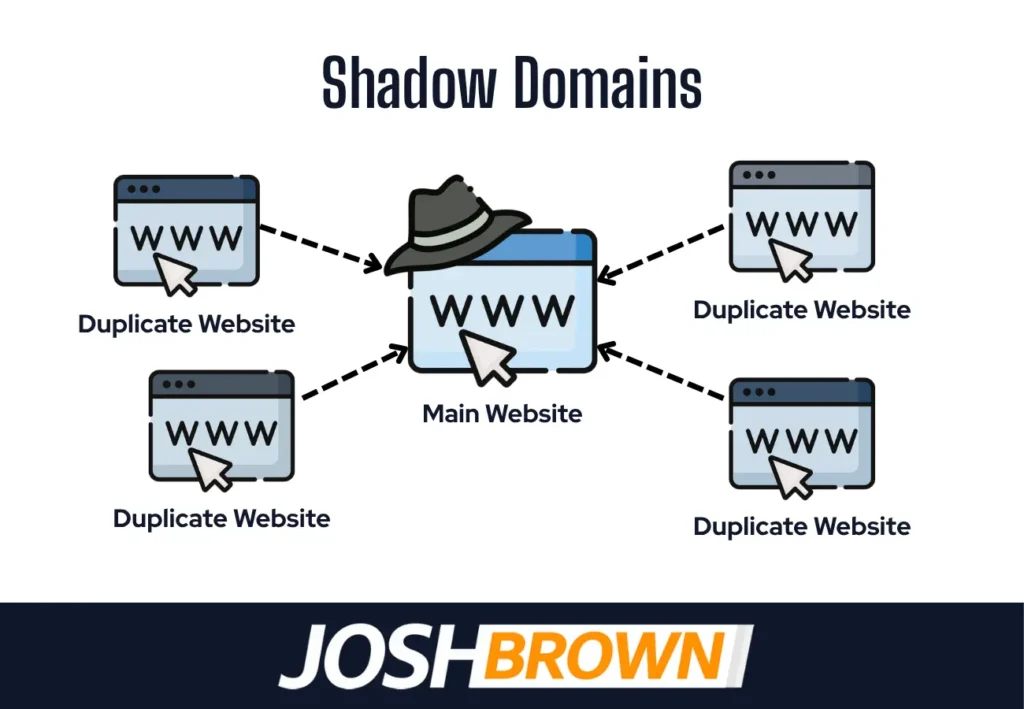
Shadow domains are duplicate websites built to rank for similar keywords and funnel traffic to a primary domain. This SEO Black Hat Technique breaks Google Guidelines and triggers Search Engine Penalties.
Shadow domains dilute content quality, confuse search intent, and manipulate indexing systems by duplicating or slightly altering content across multiple domains. These setups generate artificial backlinks and split ranking authority.
Procedurally, shadow domains disrupt crawl efficiency, inflate backlink networks, and undermine domain trust. Data signals become fragmented, making accurate visibility and ranking assessments unreliable. These domains reduce Website Credibility and risk total de-indexing.
Avoid shadow domains by maintaining a single, authoritative website. Consolidate content under one domain, use 301 redirects if needed, and monitor referring domains for unusual patterns. Maintain SEO Transparency by ensuring all domains serve unique, user-focused content.

5. Link Farming
Link farming is the creation or use of large networks of unrelated websites to generate backlinks artificially. This SEO Black Hat Technique violates Google Guidelines and results in severe Search Engine Penalties.
Link farms inflate a site’s backlink profile without delivering topical or contextual value. These schemes aim to trick search engines into ranking a site higher based on link quantity rather than link quality, damaging the trust model behind SEO.
Procedurally, link farming misleads ranking algorithms, skews domain authority metrics, and triggers manual penalties. These links often originate from low-quality or deindexed sites, weakening Website Credibility and corrupting link data.
Avoid link farms by building backlinks from relevant, high-authority sources. Focus on editorial placements, earned mentions, and content partnerships. Audit backlinks regularly and disavow suspicious domains to maintain SEO Transparency and compliance.
6. Paid Link Schemes
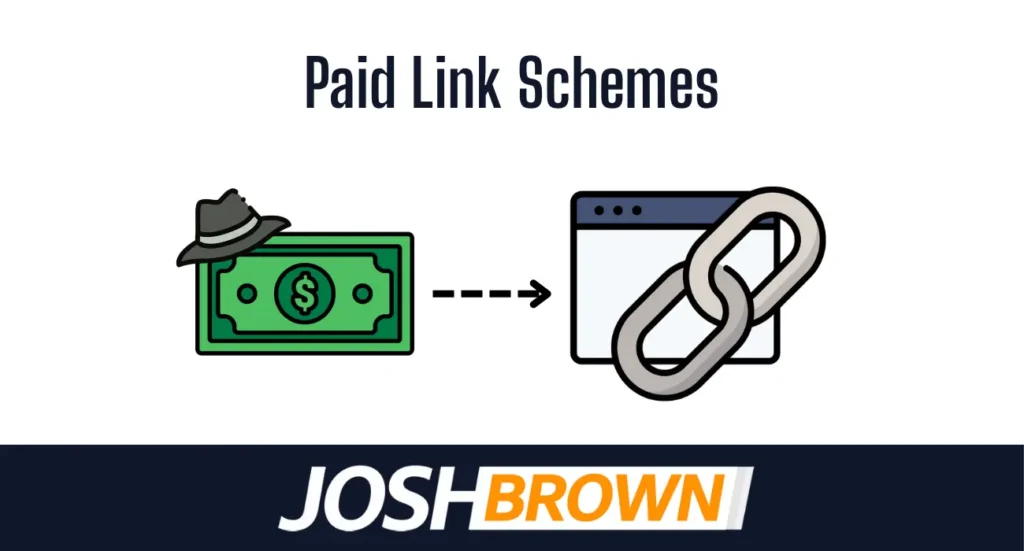
Paid link schemes involve exchanging money or services for backlinks with the intent to manipulate PageRank. This SEO Black Hat Technique violates Google Guidelines and leads to Search Engine Penalties.
These schemes include buying dofollow links, participating in sponsored link networks, or trading services for backlinks without disclosure. Paid links distort the natural backlink graph, inflate authority scores, and misrepresent content relevance.
Procedurally, paid link schemes bypass editorial judgment, degrade link trust, and pollute backlink data. These tactics damage Website Credibility and expose domains to ranking losses or de-indexing.
Build links through genuine outreach, guest content, or press mentions. Disclose sponsored links with rel=”sponsored” or rel=”nofollow” tags. Use backlink audits to detect unnatural patterns and maintain SEO Transparency.

7. Surprise Directs
Surprise redirects send users to different destinations than the URLs they clicked, often without consent. This SEO Black Hat Technique violates Google Guidelines and results in Search Engine Penalties.
These redirects mislead users and search engines by masking real content paths. Redirects trigger after page load, from mobile-specific URLs, or through injected scripts, creating a false impression of content relevance or legitimacy.
Procedurally, surprise redirects damage crawlability, breaks trust signals, and distorts engagement metrics. Redirect chains inflate bounce rates, corrupt session data, and reduce Website Credibility.
Avoid this tactic by keeping redirects intentional and declared. Use 301 or 302 status codes transparently, align user and crawler paths, and test links regularly. Maintain SEO Transparency by ensuring users always reach the expected page content.
8. Duplicated Content
Duplicated content refers to identical or near-identical text appearing on multiple URLs across the same or different domains. This SEO Black Hat Technique violates Google Guidelines and often leads to Search Engine Penalties.
Duplicated content confuses search engines about which version to rank, dilutes link equity, and fragments visibility. Repeating the same content across practice area pages or publishing syndicated articles without canonical tags misrepresents originality.
Procedurally, duplication affects indexing efficiency, inflates crawl budget waste, and distorts keyword targeting data. It undermines Website Credibility by offering no unique value to users or algorithms.
Prevent duplication by creating original content for each page, using canonical tags for syndicated material, and consolidating similar pages. Track URL output with crawl tools and maintain SEO Transparency through distinct, intent-matched page structures.

9. Scraper Content
Scraper content is copied material extracted from other websites using automated tools or scripts. This SEO Black Hat Technique violates Google Guidelines and triggers Search Engine Penalties.
Scraper content offers no original value and aims to gain rankings by republishing high-performing pages without permission. These tactics flood the index with duplicate material and exploit other sites’ SEO efforts.
Procedurally, scraper content disrupts crawl accuracy, inflates duplicate signals, and confuses canonical attribution. It degrades Website Credibility and leads to removal from search results.
Avoid using scraper tools. Publish only original content, cite sources properly, and protect site material with monitoring tools. Maintain SEO Transparency by ensuring all published assets reflect authentic authorship.
10. Article Spinning
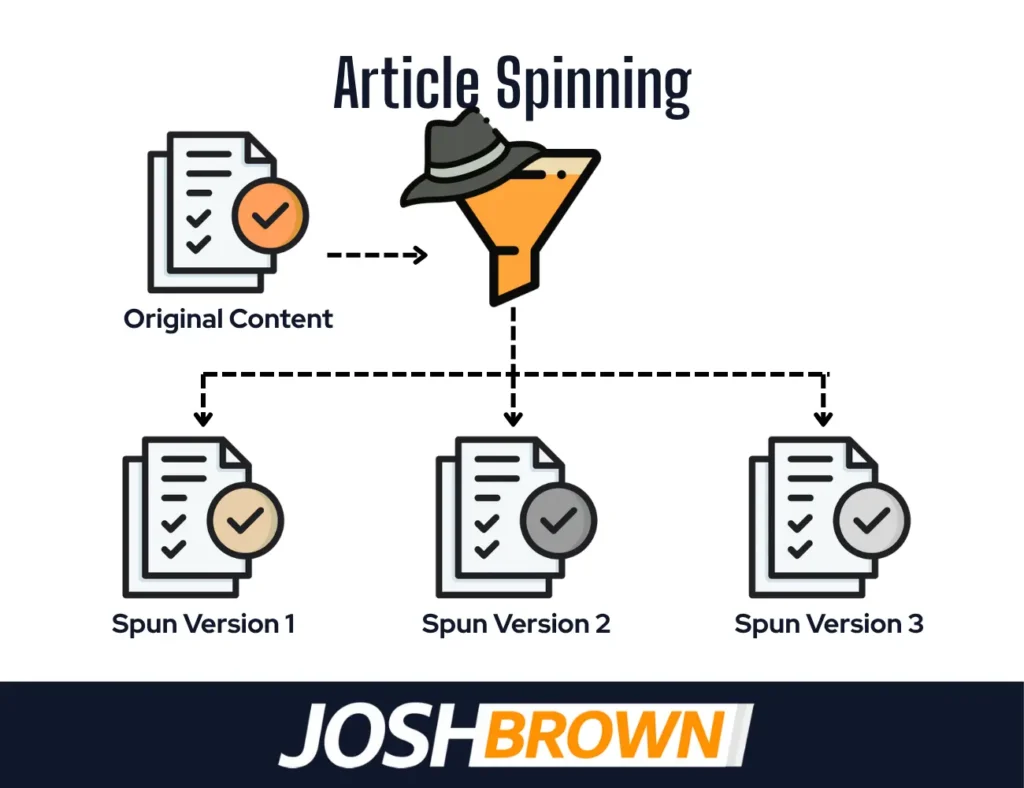
Article spinning rewrites existing content using automated tools to produce multiple versions with slight word changes. This SEO Black Hat Technique violates Google Guidelines and results in Search Engine Penalties.
Spun articles reduce content quality, strip semantic clarity, and create pages filled with unnatural phrasing. These versions often lack coherence and aim to game ranking algorithms by simulating originality.
Procedurally, article spinning distorts topic relevance, weakens internal linking structures, and misleads content classifiers. It lowers Website Credibility and pollutes keyword performance tracking.
Avoid spinning by writing original, user-focused content. Use manual editing, structured research, and SEO Transparency tools to track content uniqueness and maintain compliance.
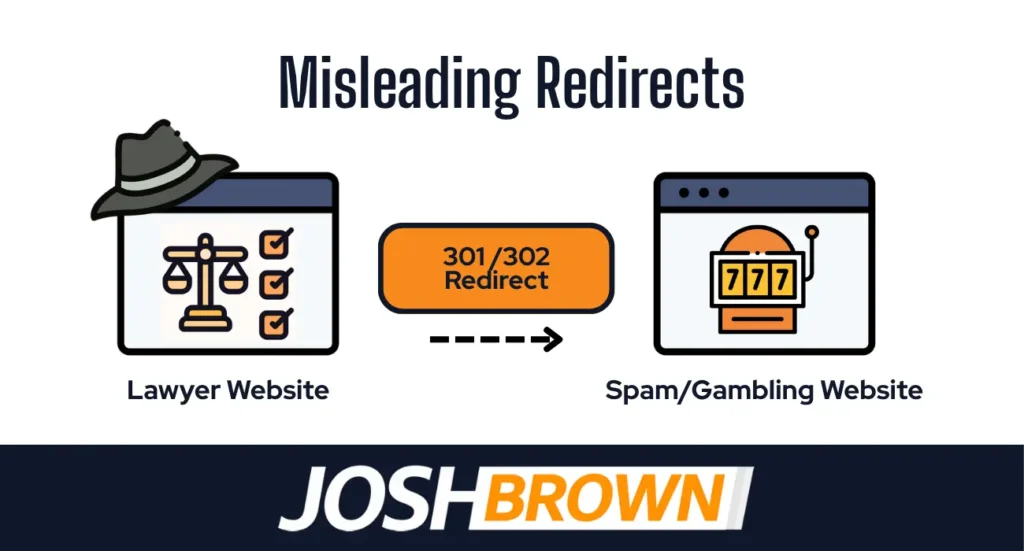
11. Mislead Redirects
Mislead redirects manipulate users or crawlers by rerouting them to unrelated or deceptive pages. This SEO Black Hat Technique violates Google Guidelines and causes Search Engine Penalties.
These redirects occur through masked URLs, mobile redirects to irrelevant content, or conditional server responses. They misrepresent page intent and exploit search engine trust systems.
Procedurally, mislead redirects break site navigation logic, corrupt engagement data, and reduce Website Credibility. They inflate traffic metrics artificially and create crawler misalignment.
Use consistent and visible redirect logic. Match destination intent to source context and apply proper redirect status codes. Monitor redirect behavior with SEO Transparency audits to prevent penalties.

12. Instant Link Building
Instant link building refers to the rapid generation of large volumes of backlinks using automated tools or link networks. This SEO Black Hat Technique violates Google Guidelines and leads to Search Engine Penalties.
These links often come from irrelevant, low-quality domains with no editorial oversight. The tactic inflates backlink counts to simulate authority without real trust or relevance, undermining search engine link evaluations.
Procedurally, instant link building corrupts backlink profile accuracy, triggers spam signals, and weakens Website Credibility. It distorts link velocity trends and causes volatility in search rankings.
Build links gradually through relevant, earned placements. Focus on content value, digital PR, and manual outreach. Track link acquisition patterns using SEO Transparency tools to maintain compliance and ranking stability.

13. Unverified Traffic
Unverified traffic involves inflating website visits using bots, click farms, or traffic resellers to manipulate performance metrics. This SEO Black Hat Technique violates Google Guidelines and leads to Search Engine Penalties.
Such traffic skews session data, misleads SEO reporting, and simulates false engagement. It tricks algorithms into interpreting popularity without actual user interest or conversion intent.
Procedurally, unverified traffic pollutes analytics, triggers crawler distrust, and reduces Website Credibility. It comprises A/B testing, ROI tracking, and campaign evaluation accuracy.
Use filtered analytics, IP blocking, and bot detection systems. Focus on attracting real users through organic content, validated referrals, and paid campaigns with transparent targeting. Maintain SEO Transparency by excluding artificial traffic sources.

14. Fake Google claims
Fake Google claims involve agencies falsely stating affiliation with Google, such as claiming to be “Google partners” for SEO guarantees. This SEO Black Hat Technique violates Google Guidelines and misleads clients into trusting unauthorized providers.
These claims exploit Google’s brand to sell ranking promises, often paired with black-hat tactics like link schemes or cloaked redirects. No SEO provider holds direct control over Google rankings or search visibility.
Procedurally, fake claims erode client trust, obscure real service performance, and damage Website Credibility. Misrepresentation leads to legal risk, reputational loss, and wasted budget on non-compliant tactics.
Verify credentials through Google’s official partner directory. Reject agencies using vague Google references. Demand written proof of service deliverables and maintain SEO Transparency in all third-party engagements.

15. Non-transparent transparent methods
Non-transparent methods refer to SEO practices hidden from clients, including undisclosed link sources, vague reporting, or concealed automation. This SEO Black Hat Technique violates Google Guidelines and erodes trust.
These tactics prevent clients from evaluating actual strategy or outcomes. Hidden deliverables often involve cloaking, link farming, or automated content practices that trigger Search Engine Penalties and reduce Website Credibility.
Procedurally, non-transparent methods obstruct accountability, corrupt data tracking, and expose sites to compliance risks. Agencies using these approaches avoid clear KPIs and mislead on performance metrics.
Demand full disclosure of strategies, tools, and sources. Review contracts for clarity, request access to reporting dashboards, and ensure all SEO efforts follow SEO Transparency and ethical compliance standards.
How Can You Identify Bad SEO Companies?
You can identify bad SEO companies by spotting guaranteed rankings, hidden tactics, and outdated SEO methods that violate search engine rules. These firms use deceptive practices that harm long-term visibility and trust.
Listed below are 8 clear warning signs of low-quality SEO.
- Guaranteed #1 rankings: Indicates manipulation and violates Google’s ranking guidelines.
- Lack of transparency: Conceals tools, tactics, or reporting and prevents accountability.
- No clear strategy: Shows absence of keyword plans, audit procedures, or measurable goals.
- Outdated tactics: Includes keyword stuffing, link farming, and spun content still in use.
- Fake Google affiliations: Claims like “Google partner for rankings” are false and misleading.
- Hidden deliverables: Avoids disclosing backlinks, content edits, or technical changes.
- Instant link building: Uses link schemes that trigger Search Engine Penalties.
- Automated content: Relies on spinning tools or scraping, lowering Website Credibility.
Is SEO a Scam or a Legitimate Marketing Strategy?
Yes, SEO is a legitimate digital marketing strategy when based on ethical practices, transparency, and compliance with Google Guidelines. SEO legitimacy depends on delivering long-term value through real technical audits, content strategy, link building, and performance tracking, not shortcuts or manipulative tactics.
Scam tactics include keyword stuffing, fake backlinks, article spinning, and instant ranking promises that violate algorithm rules and damage Website Credibility. Ethical SEO agents focus on crawl optimization, intent-matched content, and verified authority signals.
Businesses verify credibility by checking for clear KPIs, full transparency, client references, and a documented strategy. Avoid any agency offering guaranteed rankings, hidden deliverables, or unclear pricing.
What are Common SEO Scams to Watch Out For?
Common SEO scams to watch out for include fake traffic, link farming, black-hat tactics, and false ranking promises that violate search engine rules. These fraudulent SEO practices cause penalties, mislead clients, and damage Website Credibility.
Listed below are 8 common SEO red flags to watch out for.
- Link farming: Low-quality backlink networks are used to inflate authority unnaturally.
- Fake traffic generation: Bot visits or paid clicks are used to simulate engagement.
- Black-hat SEO: Cloaking, keyword stuffing, and hidden links are used to deceive crawlers.
- False ranking guarantees: Promises of top positions not backed by transparent methods.
- Scraper content: Copied content published without consent or value.
- Shadow domains: Duplicate sites used to manipulate indexing.
- Misleading redirects: Redirects users to irrelevant or deceptive destinations.
- Fake Google claims: Pretends to be affiliated with Google without proof.
What Unethical SEO Practices Should Businesses Avoid?
Unethical SEO practices businesses should avoid are keyword stuffing, Cloaking, Link spamming, Hidden text and links, paid link schemes, etc, deceptive tactics that seek to manipulate rankings and trigger search engine penalties. These black-hat SEO methods damage organic performance and brand reputation.
Listed below are Unethical SEO practices businesses to avoid.
- Keyword stuffing: Excessive repetition of keywords to trick algorithms.
- Cloaking: Showing different content to search engines than to users.
- Hidden text and links: Using invisible content to manipulate relevance.
- Link spamming: Bulk backlink tactics from irrelevant or low-quality sites.
- Article spinning: Auto-rewriting content to feign originality.
- Paid link schemes: Buying or trading links without disclosure.
- Scraper content: Copying content from other websites without permission.
A Moz study in 2022 found that sites using black-hat SEO faced a 50% higher penalty rate, while SEMrush reported that 70% of penalized sites failed to fully recover organic traffic after cleaning up spammy practices. These figures highlight real risk and underscore why businesses exceed ethical SEO standards.
What are the Risks of Hiring a Bad SEO Company?
The risks of hiring a bad SEO company are loss of organic visibility, search penalties, wasted budget, and reputational damage. Poor optimization strategies often rely on black-hat tactics like keyword stuffing, link schemes, or cloaking, which trigger algorithm violations and manual actions.
Bad SEO risks include de-indexing, sharp traffic drops, and broken site structure from mismanaged redirects or spammy content. These consequences of poor SEO affect brand credibility, distort analytics, and reduce long-term ROI.
Choosing the wrong provider exposes websites to fake traffic, duplicate content issues, and link profile corruption, all of which degrade ranking potential and create recovery costs.
How Do You Spot SEO Scammers?
You spot SEO scammers through no case studies or proof, Pushy sales tactics, no formal contract, suspiciously low pricing, Vague reporting, fake promises, vague reporting, and the absence of proof-backed performance. These signals help detect SEO fraud and avoid harmful tactics.
Listed below are 8 clear scam traits.
- No case studies or proof: Hides performance records and avoids data-backed results.
- Pushy sales tactics: Pressure decisions without full project clarity.
- No formal contract: Leaves deliverables and responsibilities undefined.
- Suspiciously low pricing: Implies shortcuts or black-hat automation.
- Guaranteed rankings: Violates Google’s unpredictability model and signals fraud.
- Vague reporting: Omits key metrics and masks underperformance.
- Fake affiliations: Claims ties to Google or certifying bodies without proof.
- Instant results promises: Suggests use of link spamming, cloaking, or scraping.
What Makes an SEO Service Legitimate and Trustworthy?
A legitimate and trustworthy SEO service makes Google compliance, Clear KPIs, Regular updates, Industry experience, Custom strategies, transparency, measurable goals, and ethical practices core to its operations. Reliable SEO adheres to Google Guidelines, emphasizes clear reporting, and delivers steady, data-driven results.
Listed below are 7 key traits of a reputable SEO agency.
- Google compliance: Avoids cloaking, link spamming, and other black-hat techniques.
- Clear KPIs: Uses metrics like organic traffic, click-through rates, and conversions for goal setting.
- Regular updates: Provides structured reports and strategy reviews at consistent intervals.
- Industry experience: Shares client case studies that demonstrate ethical SEO success.
- Custom strategies: Tailors technical fixes, content creation, and outreach to business needs.
- Transparent reporting: Includes full backlink lists, on-site changes, and technical adjustments.
- Client references: Offers verifiable testimonials and performance documentation.
A study by Metrics Rule, titled “SEO Reporting Drives 20% More Engagement with Clients,” in 2025, found that businesses using transparent SEO reporting saw up to a 30% increase in client engagement and stronger long-term retention.
How Many Lawyers Are There in the US?
In the US, there are 1,322,649 active lawyers as of January 1, 2024, according to the American Bar Association. This represents a 3.2 % growth since 2014, with growth peaking at 1.352 million in 2019 before a slight decline back to the current level. The lawyer in the US anchor text reflects that roughly four lawyers exist per 1,000 residents nationally; New York and California alone account for 28 % of the total lawyer population.
Female lawyers have increased from 36 % in 2014 to 41 % in 2024, while lawyers of color rose from 12 % to 23 % in the same period. These figures highlight a legal workforce that is large, gradually growing, and slowly becoming more diverse.
Where Can I Get Ethical SEO Agents?
You can find ethical SEO agents through reputable platforms like Clutch, UpCity, or LinkedIn, and by assessing case studies, credentials, and transparent reporting. Attending an ethical SEO agents conference helps connect with white‑hat providers who focus on long‑term, compliant strategies.
Reliable SEO agencies follow Google’s Webmaster Guidelines, avoid black‑hat tactics, and share detailed performance metrics. Firms specializing in SEO for law firms often showcase ethical practices and proven results.
A study by SEORated, titled “Customer Trust Blueprint: How Data‑Driven Transparency Increased Conversions,” in 2024 found that 91% of enterprise marketers believe brand trust directly impacts conversion, yet fewer than 27% of agencies link visibility to trust metrics. Agencies using data‑driven transparency achieved higher client retention and conversion rates.
Why Local Listing Matters for a Law Firm?
Local listings matter for law firms because they improve visibility in local search, strengthen map pack rankings, and increase client trust through verified information. Platforms like Google Business Profile, Bing Places, and Justia ensure local listing matters for law firm marketing by showcasing accurate contact data and office locations in “near me” results.
NAP consistency, name, address, and phone number across all listings signal reliability to search engines. Verified listings with positive reviews increase click-through rates and conversions by building confidence among high-intent users searching for legal help nearby.
Legal directories also boost credibility and drive referral traffic. Accurate local profiles help firms capture leads at the decision stage of the buyer journey, making local search a direct path to client acquisition.